For building envelope materials, performance is not only about what appears on a product datasheet. It is also about how consistently the product behaves during development, before sampling, during production, after aging exposure and before shipment. At Vantell, our internal testing lab was built to support this process.
Vantell’s in-house laboratory is not positioned as a replacement for independent certification or third-party testing. Formal code evaluation, certification reports and project-specific compliance testing should always be completed by qualified external laboratories when required. However, an internal lab gives us an important advantage: it allows our development and quality teams to observe material behavior earlier, faster and more frequently.
Why an Internal Lab Matters
Building envelope products are used in demanding assemblies where water, vapor, wind, UV exposure, temperature change and adhesion performance all matter. A housewrap may need to resist bulk water while remaining vapor permeable. A roof underlayment may need to shed water before the primary roof covering is installed. A flashing tape may need to bond to different substrates under changing site conditions. A self-adhered membrane may need to maintain dimensional stability and adhesion after environmental exposure.
Without internal testing capability, many of these questions can only be answered slowly through outside testing or after full production. With an internal lab, Vantell can screen materials during development, compare different technical routes, monitor production consistency and identify potential issues before products are released to customers.
Supporting Product Development
New product development often requires repeated adjustments. A membrane structure, coating weight, adhesive formulation, backing material or lamination method may all affect final performance. Internal testing helps our team compare these variables in a more systematic way.
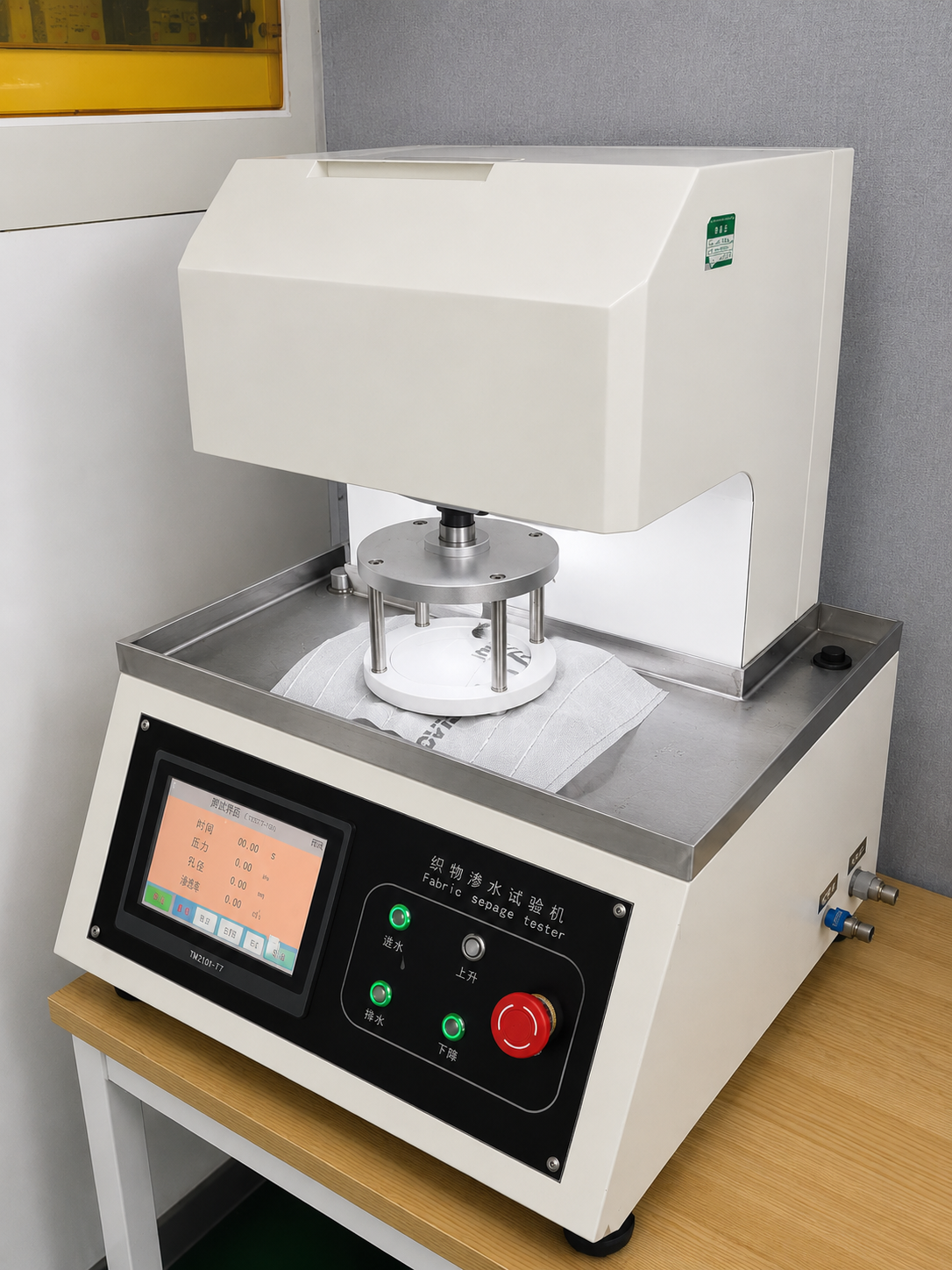
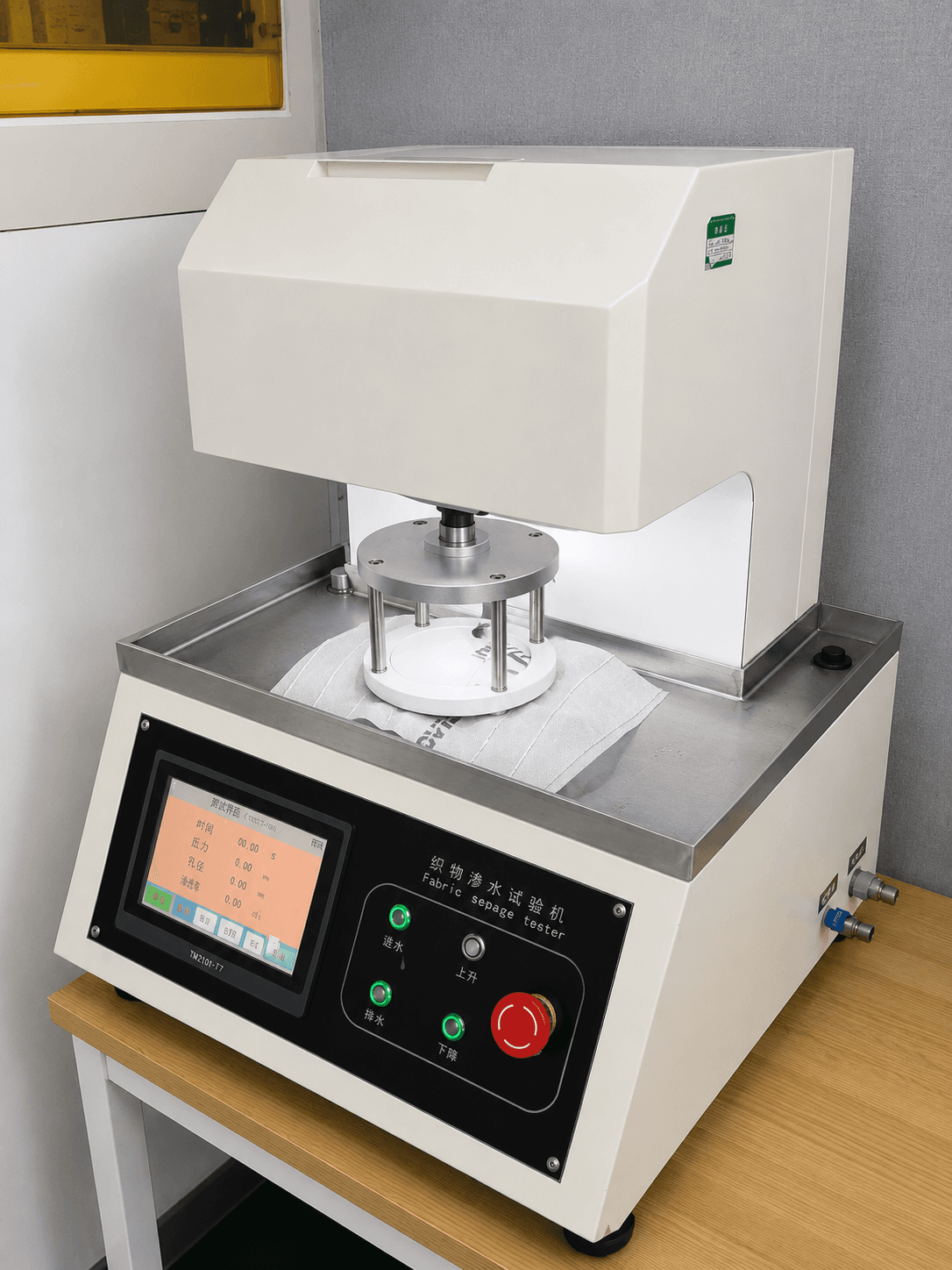
For WRB, housewrap, drainable membrane, roof underlayment and self-adhered membrane development, water resistance is one of the first indicators we review. Internal hydrostatic pressure and seepage checks help us understand how a sample behaves under controlled water pressure and whether the structure is moving in the right direction before we send samples for more formal evaluation.
For tapes and flashing products, peel adhesion testing helps us compare adhesive performance on selected substrates. This is especially important because building envelope tapes are rarely used in isolation. They must work together with membranes, panels, sheathing, window frames, roof substrates and other jobsite materials. Internal peel testing gives us a practical way to evaluate bonding behavior before making product recommendations.
Routine Checks for Key Performance Areas
Vantell’s internal lab supports several important testing areas related to building envelope products:
- Hydrostatic pressure and water resistance: used for routine checks of water resistance and seepage behavior for WRB, housewrap, roof underlayment and related membrane samples.
- Water vapor transmission: used to evaluate vapor-permeability behavior for breathable membranes, vapor-control layers and vapor-retarding product development.
- Peel adhesion: used to support adhesive-performance checks for flashing tapes, seam tapes, roof tapes and self-adhered membranes on selected substrates.
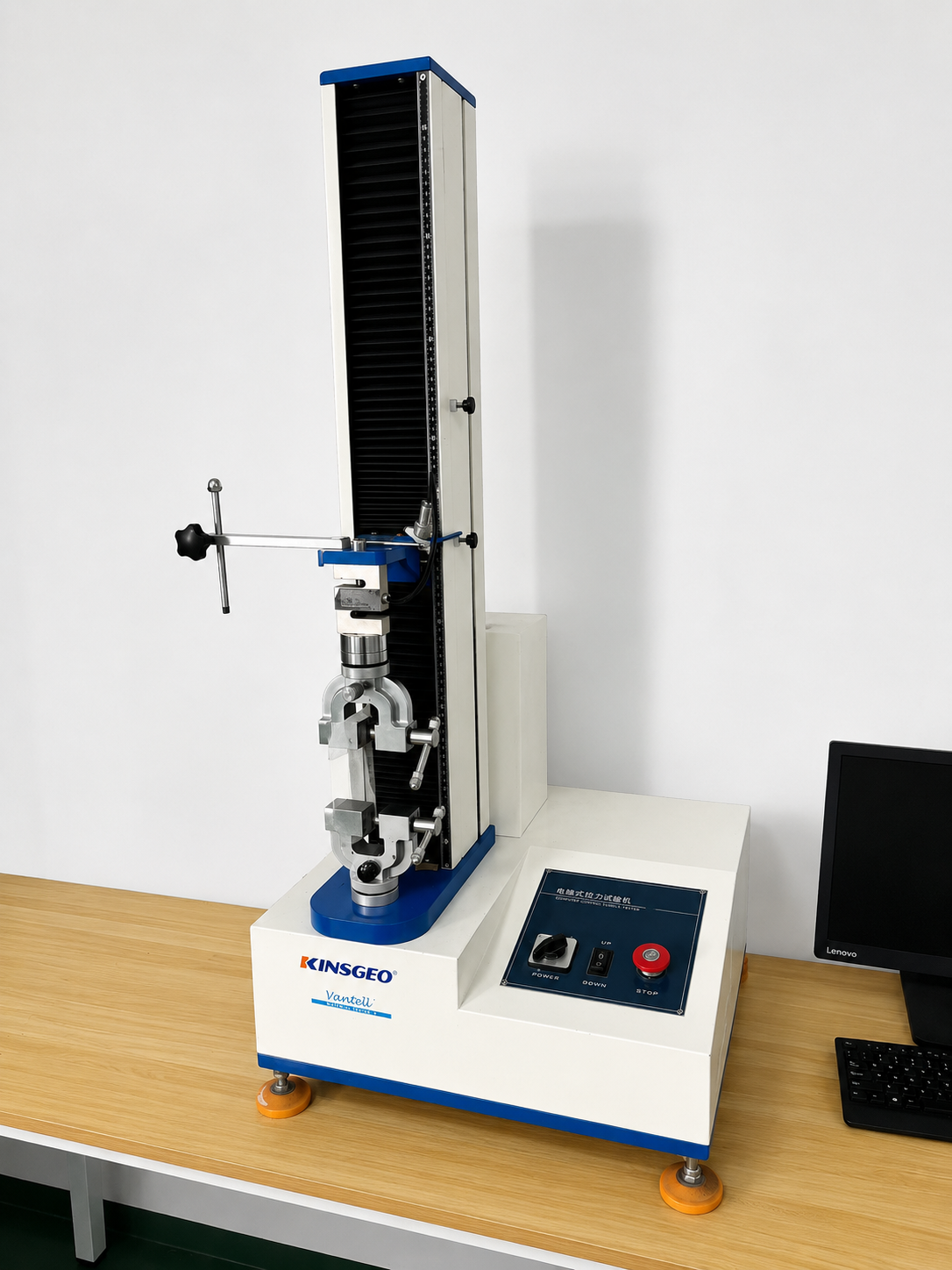
- Tensile strength and elongation: used to evaluate material strength, flexibility and consistency before sampling, specification review and production release.
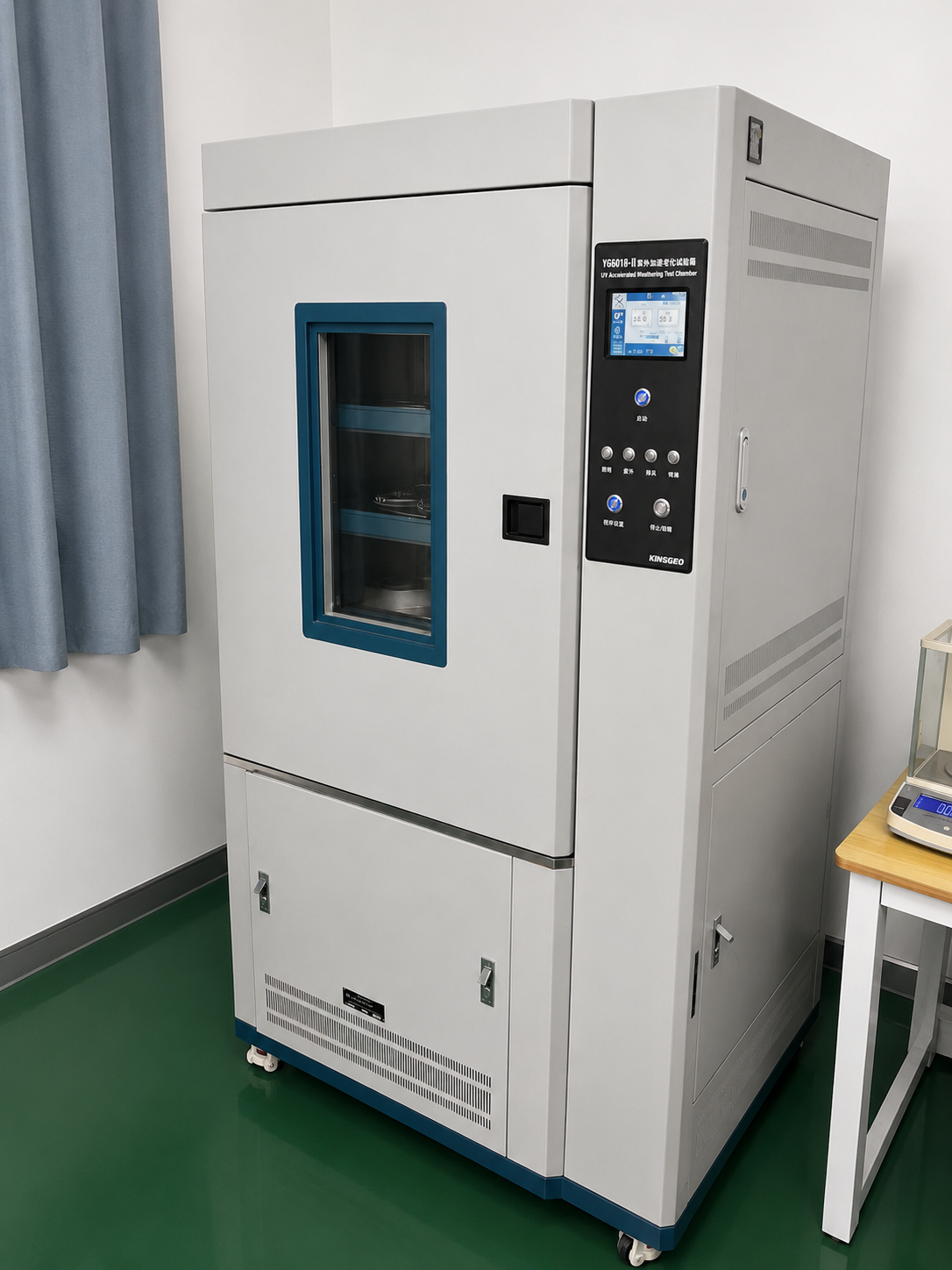
- High-low temperature cycling: used to observe material response, adhesive behavior and dimensional stability under controlled temperature-cycle conditions.
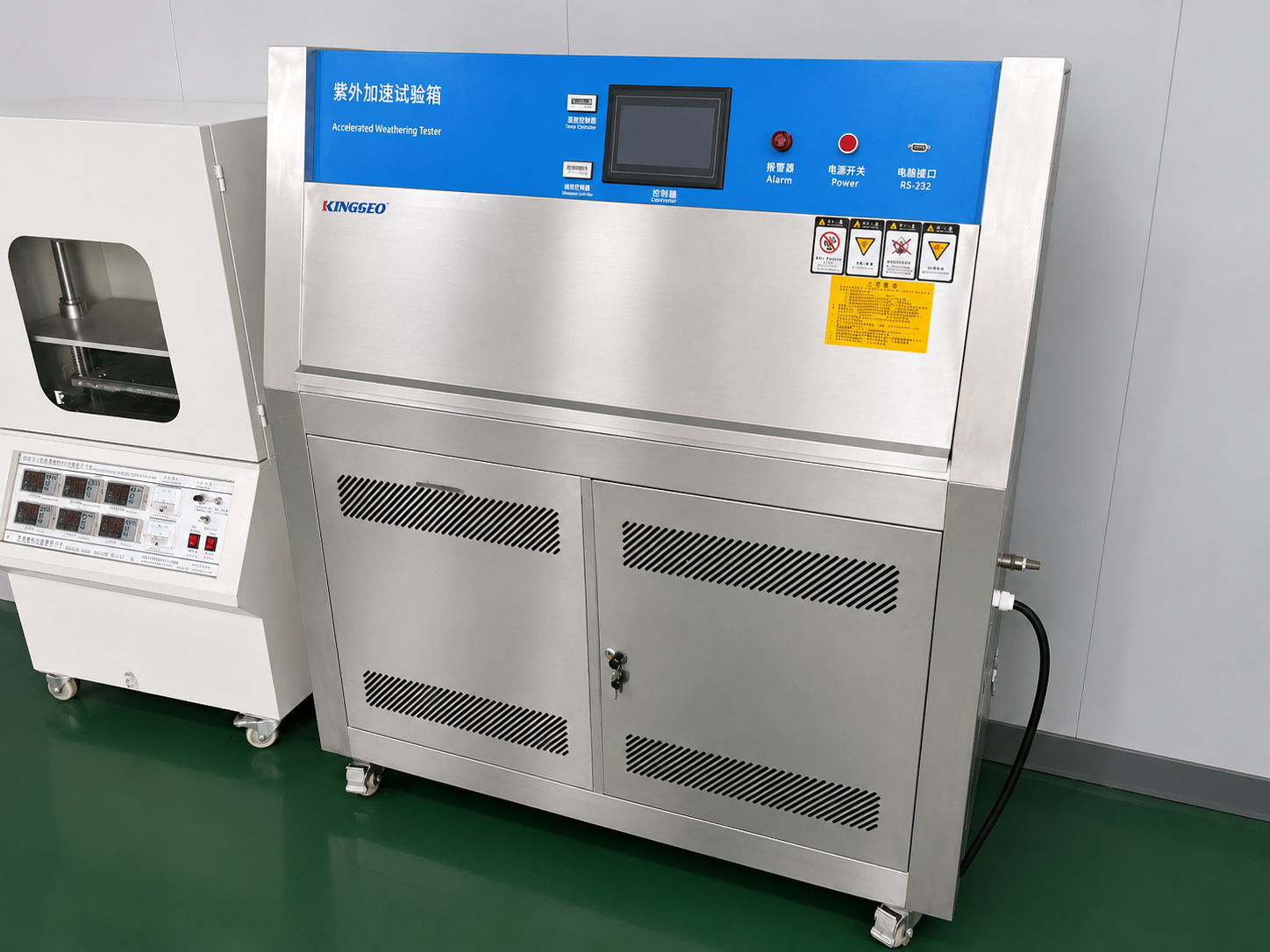
- UV aging and accelerated weathering: used for comparative aging evaluation and to observe durability-related material changes under accelerated exposure.
Internal Testing Capabilities for Different Market Requirements
Different markets evaluate building envelope products through different standards, test methods and application expectations. Vantell’s internal laboratory helps us conduct early-stage screening and routine checks before customer sampling, specification review or third-party testing.
The standards and criteria listed below are provided as a market-oriented reference map. They do not mean that every test is performed in-house under accredited laboratory conditions. Internal testing is used for development evaluation, quality-control checks and pre-screening. Official certification, code-compliance evaluation and final project approval should always be completed through qualified third-party laboratories or recognized evaluation bodies when required.
North America: WRB, Flashing Tape, Self-Adhered Membrane and Roof Underlayment
For North American projects, Vantell’s internal testing can support pre-evaluation for housewrap, mechanically attached WRB, vapor-permeable wall membranes, drainable membranes, flashing tapes, seam tapes, self-adhered membranes, synthetic roof underlayments and roof flashing products.
For WRB and vapor-permeable flexible sheet materials, relevant standards and evaluation criteria may include ICC-ES AC38, ASTM E2556/E2556M, ASTM E96/E96M, AATCC 127, ASTM D5034, ASTM D5035, ASTM D4533, ASTM D2261, ASTM D3776/D3776M, ASTM D1777, ASTM G154, ASTM E2178, ASTM E2357 and ASTM E2273, where applicable.
These references may relate to water-resistive barrier performance, vapor transmission, hydrostatic pressure resistance, tensile strength, tear resistance, basis weight, thickness, UV exposure, air permeance, air-barrier assembly performance and drainage efficiency. Internal lab checks help Vantell understand whether a product direction is aligned with these performance areas before formal third-party testing.
For flashing tapes, seam tapes, self-adhered flashing and building-envelope transition tapes, relevant references may include AAMA 711, AAMA 712, ASTM D3330/D3330M, PSTC-101, ASTM D1000, ASTM D3654/D3654M, ASTM D6195 and customer-specific requirements for peel adhesion, low-temperature flexibility, water immersion, UV exposure, thermal cycling, shear resistance and substrate compatibility.
For roof underlayments, synthetic roof underlayments and steep-slope roofing applications, relevant North American references may include ASTM D8257/D8257M for mechanically attached polymeric roof underlayment, ASTM D1970/D1970M for self-adhering polymer modified bituminous sheet materials used as steep roofing underlayment for ice dam protection, ASTM D226/D226M, ASTM D4869/D4869M, ICC-ES AC188, ICC-ES AC48, ICC-ES AC207, ASTM E108 and UL 790, where applicable.
For Canadian-oriented projects, product evaluation may also involve National Building Code of Canada requirements, CCMC evaluation pathways and project-specific references for sheathing membranes, air barriers, vapor control, water-resistive barriers and roof underlayment applications.
Europe: Roof Underlays, Wall Underlays, Vapor Control Layers and Tapes
For European-oriented product development, Vantell can conduct internal screening for breathable membranes, roofing underlays, wall underlays, vapor-control layers, vapor-retarding membranes and building-envelope tapes. European projects often focus on water resistance class, vapor transmission, tensile strength, tear resistance, dimensional stability, UV aging, reaction to fire, air tightness and system compatibility with roof or façade assemblies.
For roofing and wall underlay membranes, commonly referenced European standards may include EN 13859-1 for underlays for discontinuous roofing and EN 13859-2 for underlays for walls. Related performance test references may include EN 13111, EN 1928, EN ISO 12572, EN 12311-1, EN 12311-2, EN 12310-1, EN 12310-2, EN 1107-1, EN 1107-2, EN 1109, EN 1297 and EN 12114, depending on product type and evaluation route.
For higher-performance roof-underlay or façade-membrane projects, European Assessment Documents such as EAD 030218-01-0402 for membranes used as roof underlay may also be relevant, especially where enhanced UV resistance, water pressure resistance, nail perforation tightness, air penetration resistance or seam watertightness is part of the target evaluation.
For vapor-control layers and vapor-retarding membranes, relevant European references may include EN 13984, EN ISO 12572 and project-specific sd-value or vapor-resistance requirements. These references are important when developing vapor-open membranes, vapor-control layers or interior airtightness systems.
For fire-related classification, relevant European references may include EN 13501-1, EN ISO 11925-2, EN 13823 and other project-specific reaction-to-fire or façade-system requirements. Internal aging and material-screening checks cannot replace official fire classification, but they help Vantell prepare more stable products for formal evaluation.
For building-envelope tapes, flashing tapes and membrane-sealing accessories, Europe does not always use one single universal product standard for every application. However, common technical references may include EN 1939, ISO 29862, ISO 29863, ISO 29864, EN 1942 and project-specific system requirements related to air tightness, vapor control, UV exposure, substrate compatibility and long-term adhesion.
Australia and New Zealand: Pliable Building Membranes, Sarking, Roof Underlays and Tapes
For Australia and New Zealand market requirements, Vantell’s internal lab can support development checks for pliable building membranes, sarking-type membranes, roof underlays, wall underlays, vapor-permeable membranes, reflective membranes and related tapes or sealing accessories.
For pliable building membranes and underlays, key market references may include AS 4200.1 or AS/NZS 4200.1 for material requirements and classification, and AS 4200.2 for installation requirements. These standards are commonly associated with sarking membranes, wall wraps, roof underlays, vapor-control membranes, water-control membranes, air-control membranes and reflective or thermal-control membrane products.
Related test-method references may include the AS/NZS 4201 series for pliable building membranes and underlays. Relevant test areas may include dry delamination, wet delamination, shrinkage, resistance to water penetration, emittance and surface water absorbency. Examples include AS/NZS 4201.2 for resistance to wet delamination, AS/NZS 4201.3 for shrinkage, AS/NZS 4201.4 for resistance to water penetration, AS/NZS 4201.5 for emittance and AS/NZS 4201.6 for surface water absorbency.
For UV exposure, thermal-control or reflective membrane projects, relevant references may also include ASTM G154, ASTM E408 and AS/NZS 4859.1, depending on the product claim, project specification and evaluation pathway.
For fire-related classification and regulatory documentation, relevant Australian references may include AS 1530.2 for flammability index and, depending on the application and project requirement, other fire-test references such as AS/NZS 1530.3 or AS 1530.1. These fire-related requirements should be confirmed through accredited third-party testing when required.
For tapes used with pliable building membranes, roof underlays, wall wraps and flashing details, internal checks may include peel adhesion, tensile strength, elongation, low-temperature behavior, aging exposure and compatibility with selected substrates. Depending on customer requirements, peel adhesion may be evaluated using internationally recognized methods such as ASTM D3330/D3330M, PSTC-101, EN 1939, ISO 29862 or customer-specific test protocols.
For New Zealand projects, additional evaluation routes such as NZBC-related requirements, E2 external moisture considerations and BRANZ Appraisal pathways may also be considered when required by the customer or project specification.
Better Control Before Third-Party Testing
Third-party testing is important, but it can be time-consuming and costly if a product is not technically ready. Internal testing helps reduce this risk. Before sending samples to an external laboratory, Vantell can first review whether the product is directionally aligned with the target performance requirements.
This does not mean internal test results replace certified data. Instead, they help improve the quality of the samples we submit. By screening materials internally first, we can reduce unnecessary trial-and-error, improve development efficiency and provide customers with more stable product options.
Improving Batch Consistency
For OEM and ODM customers, one of the most important questions is not only whether a product can pass a test once, but whether it can be produced consistently over time. Internal testing helps us monitor this point more closely.
When raw materials, coating conditions, lamination settings or production parameters change, internal checks can help identify whether the change has affected key properties. This is especially useful for products such as housewrap, seam tape, flashing tape, roof underlayment, self-adhered WRB and vapor-control membranes, where small changes in structure or adhesive behavior may influence final application performance.
Supporting Customer Projects
Different markets and customers may focus on different performance requirements. Some customers need vapor-open membranes. Some require stronger water resistance. Some need roof underlayments with specific UV or water-shedding performance. Some are more concerned about low-temperature adhesion, high-temperature stability or compatibility with specific substrates.
Vantell’s internal lab allows us to support these project discussions with more practical technical feedback. Instead of only discussing product structure or price, we can evaluate samples, compare options and provide development direction based on observed performance.
This is particularly valuable for OEM and private-label customers who need a supplier capable of more than basic manufacturing. They need a partner who can help adjust specifications, review risks and support long-term product improvement.
A Practical Part of Vantell’s Quality System
Our internal lab is part of Vantell’s broader quality-control and product-development process. It helps connect R&D, production, quality inspection and customer communication. The goal is not to create marketing claims without evidence, but to make better decisions before products reach the jobsite.
By combining internal testing, production experience and third-party verification when required, Vantell aims to provide building envelope materials that are more consistent, more reliable and better aligned with customer application needs.
Confidence Built Through Testing
Customers choose a building envelope supplier not only for price, but also for technical support, product stability and long-term reliability. Vantell’s internal testing lab reflects our commitment to these priorities.
From water resistance and tensile strength to aging exposure, vapor transmission, peel adhesion and temperature cycling, our in-house testing capability helps us understand our products more deeply before they are supplied to the market.
For customers developing housewrap, flashing tape, seam tape, roof underlayment, self-adhered membrane or other building envelope products, Vantell can provide both manufacturing capability and practical technical support throughout the product-development process.
Vantell Internal Lab Equipment
The following equipment supports Vantell’s internal product-development and quality-control process for building envelope materials.