
Technical articles and application notes
Publish technical materials, application scenarios and building envelope guidance for customers.
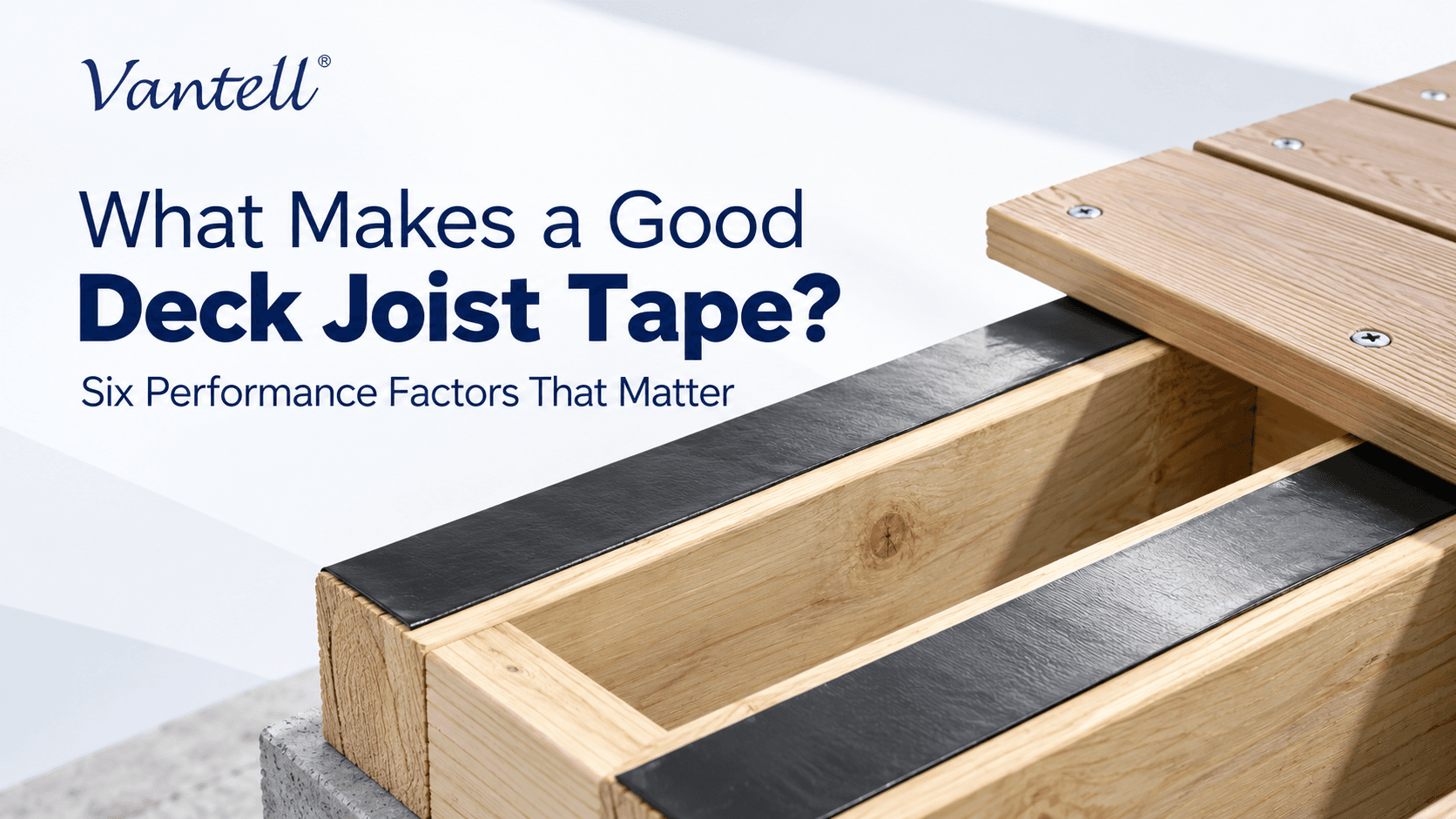
What Makes a Good Deck Joist Tape? Six Performance Factors That Matter
A good deck joist tape does more than provide a waterproof barrier. It must seal around fasteners, adhere reliably to pressure-treated lumber, resist moisture and temperature fluctuations, and maintain long-term durability. This article explores six essential performance factors that define a high-quality deck joist tape, helping contractors, distributors, and OEM buyers make informed product decisions.
2026-10-13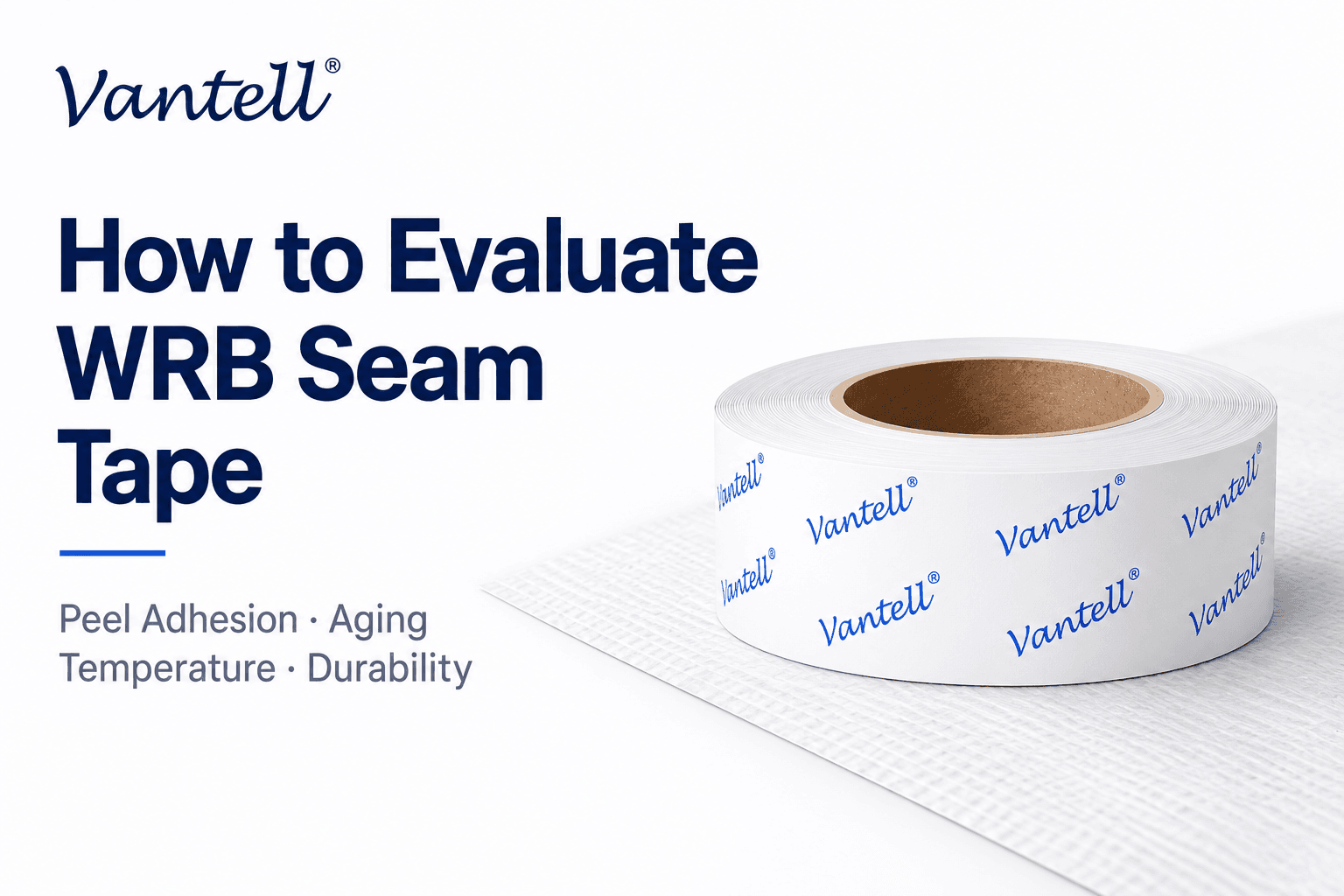
How to Evaluate WRB Seam Tape: Peel Adhesion, Aging, Temperature and Durability
Learn how to evaluate WRB seam tape using peel adhesion on actual membranes, dwell time, heat and UV aging, cold-temperature application, moisture resistance, shear and failure-mode analysis.
2026-09-14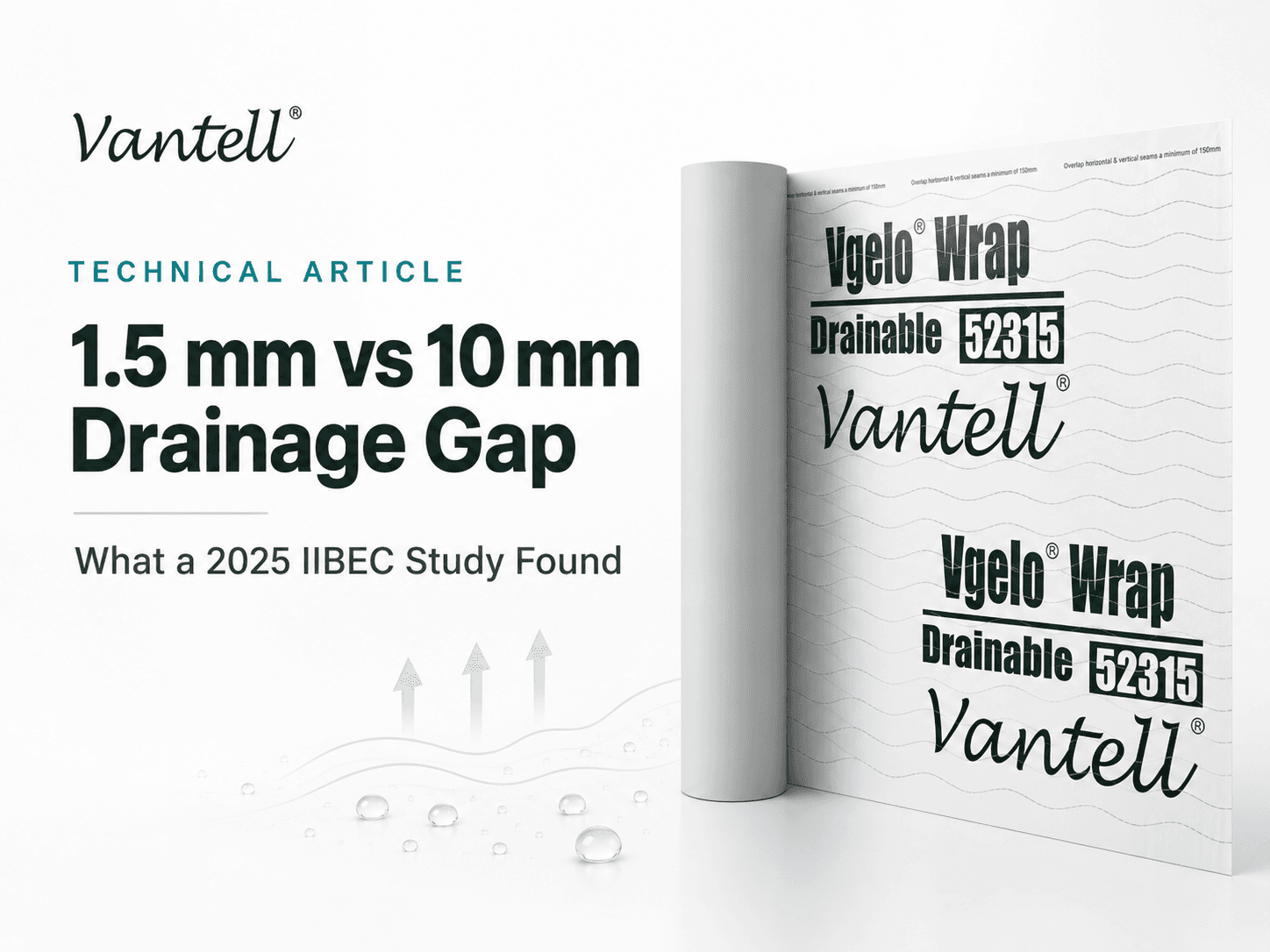
Does a Drainage Gap Need to Be 10 mm? What a 2025 IIBEC Study Found
A 2025 IIBEC study compared 1.5 mm drainage wraps with conventional 10 mm drainage spaces behind fiber cement cladding. The results challenge the assumption that a larger gap automatically means better drainage and highlight the importance of tested drainage efficiency, moisture storage, climate, and ventilation.
2026-09-07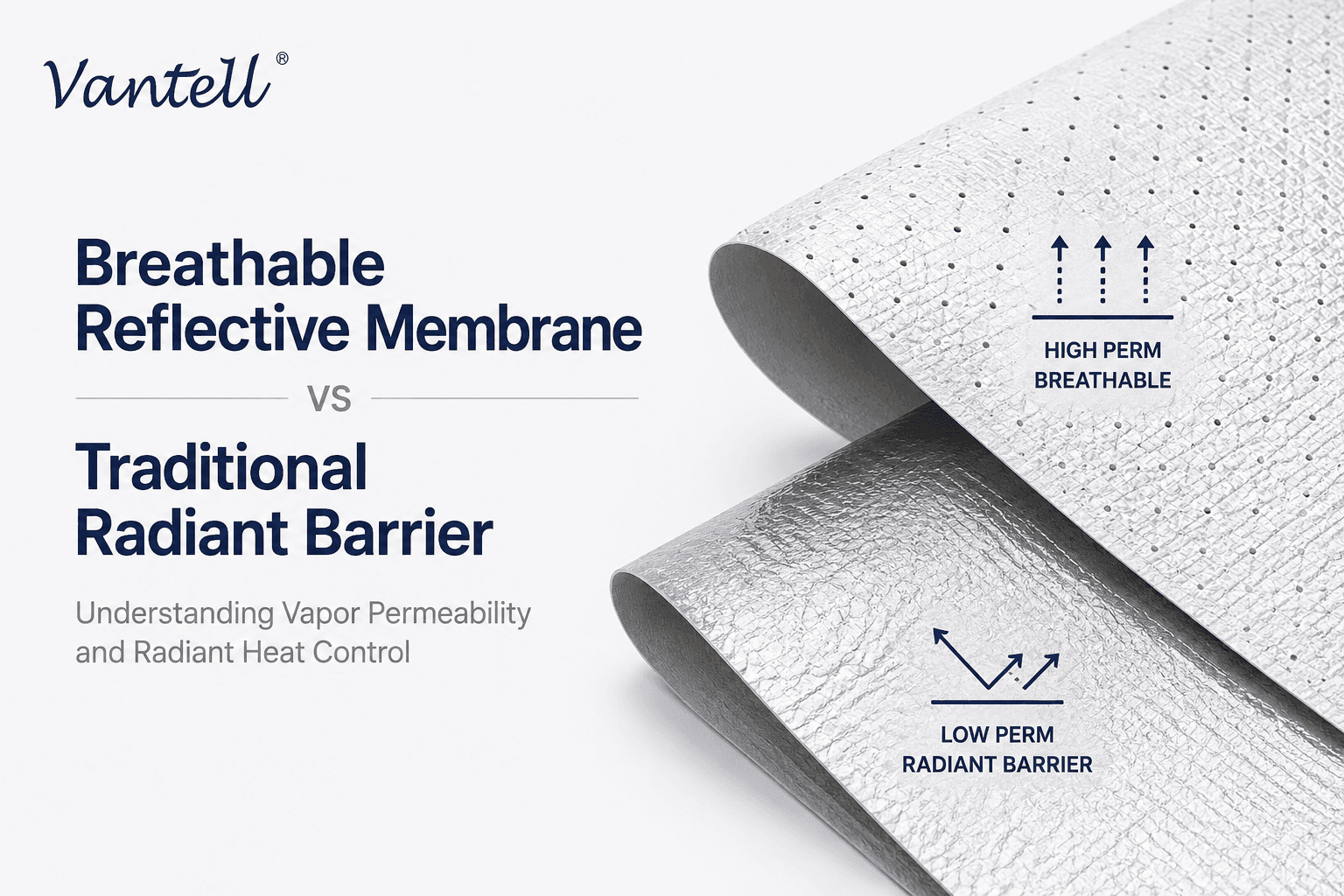
Breathable Reflective Membrane vs Radiant Barrier: Understanding Vapor Permeability and Radiant Heat Control
Learn how breathable reflective membranes differ from traditional radiant barriers, including vapor permeability, liquid water resistance, radiant heat control, air-space requirements, and their roles in wall and roof assemblies.
2026-08-11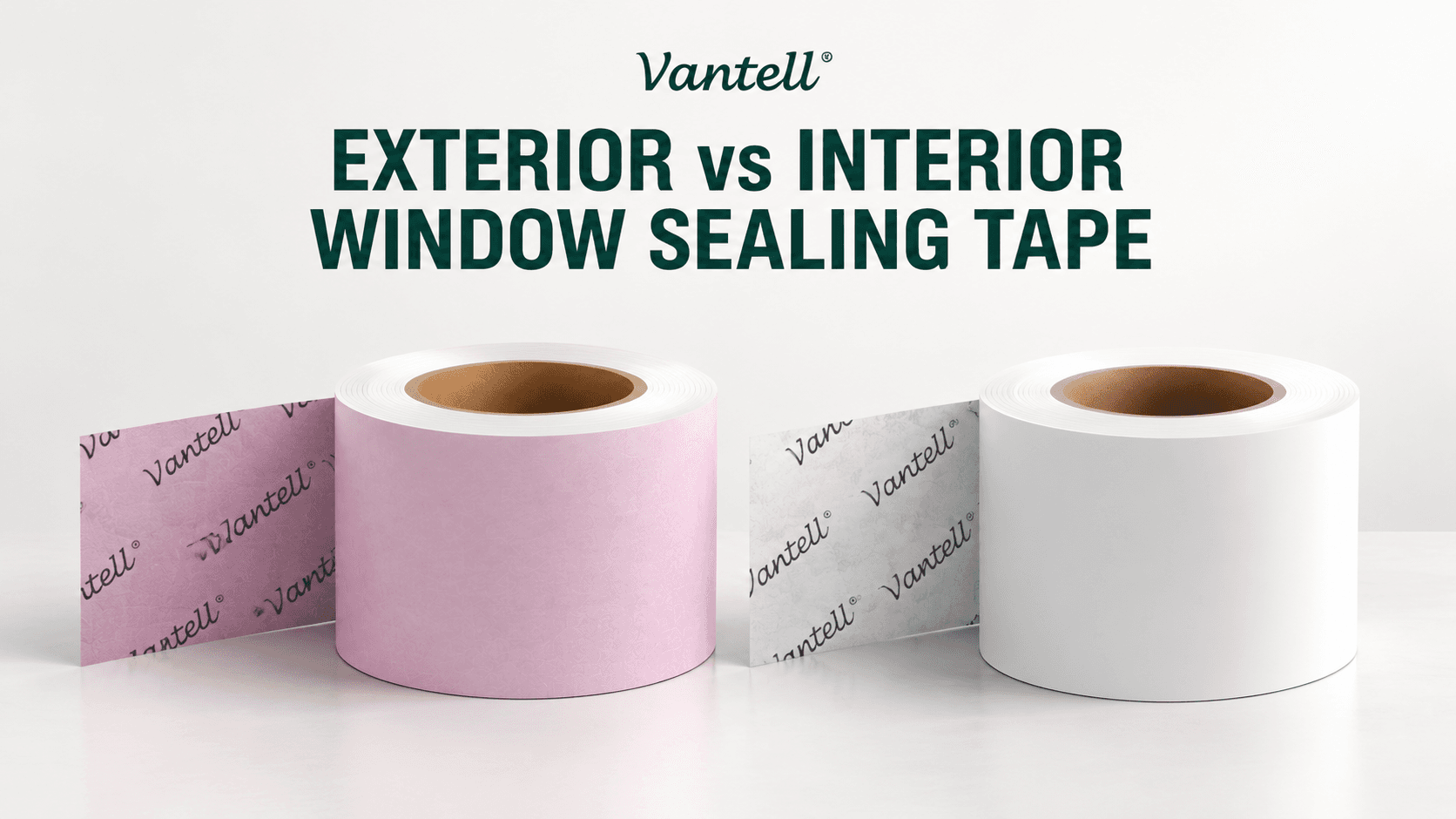
Exterior vs Interior Window Sealing Tape: Understanding Airtightness, Vapor Control and Weather Protection
Learn how exterior window flashing tape manages weather and drying, while interior window tape maintains airtightness and project-specific vapor control.
2026-08-04
How High-Perm Exterior Tape Completes a Vapour-Permeable WRB System
A vapour-permeable WRB cannot perform as a continuous weather and air-control layer unless its laps, board joints, penetrations and transitions are properly sealed. Learn how high-perm exterior acrylic tape helps complete the system while supporting outward drying.
2026-07-20
Drainage Behind Lightweight Cladding in Australian Wall Assemblies
Learn how drained cavities, vapour-permeable wall wraps, flashings and clear drainage outlets work together behind lightweight cladding in Australian wall assemblies
2026-07-18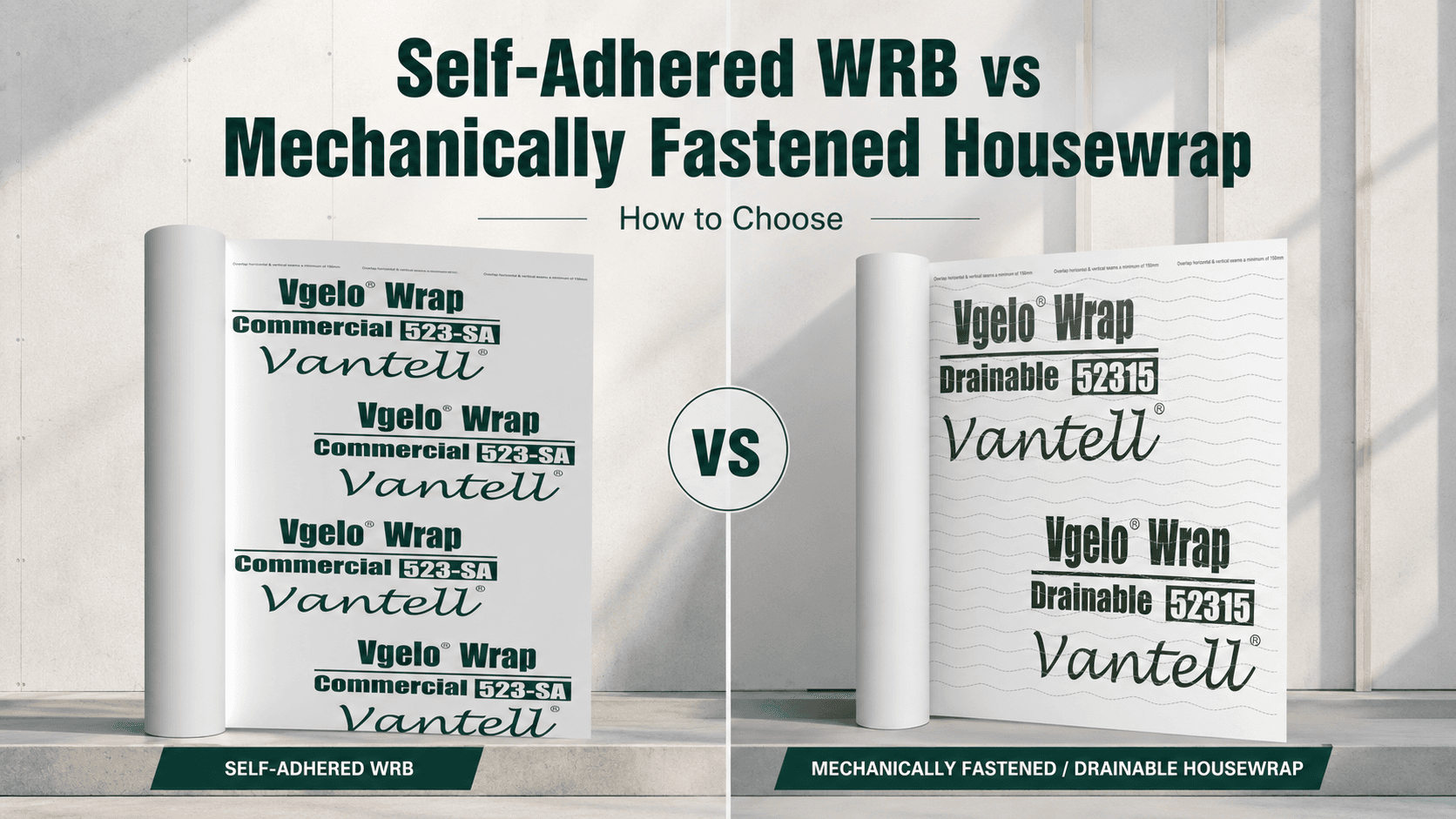
Self-Adhered WRB vs Mechanically Fastened Housewrap: How to Choose
Self-adhered WRB and mechanically fastened housewrap can both provide effective water-resistive protection, but they differ in installation method, substrate requirements, air-control continuity, drainage strategy and total installed cost. This guide explains where each system makes sense and what buyers should evaluate before selecting a product.
2026-07-17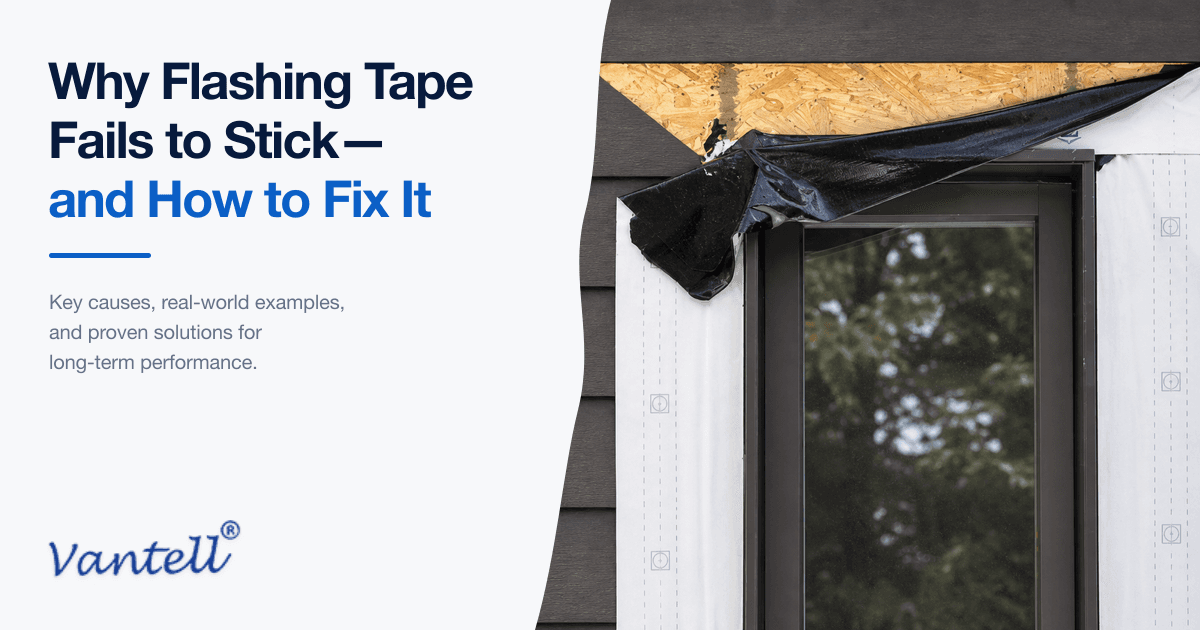
Why Flashing Tape Fails to Stick—and How to Fix It
Learn why flashing tape fails on OSB, plywood, exterior gypsum sheathing, concrete and metal, and how dust control, moisture management, low-temperature application, primers, pressure rollers and field adhesion testing can prevent failures.
2026-07-15
Choosing the Right Membrane Sealing Tape: Single-Sided, Double-Sided or High-Performance Vapour-Open Tape?
Single-sided, double-sided and high-performance vapour-open tapes may all be used around membrane joints, but they perform different functions. This guide explains how VSST, VDST and Vantell AeroSeal EX differ in joint configuration, application scope, weather exposure and building-envelope performance.
2026-07-13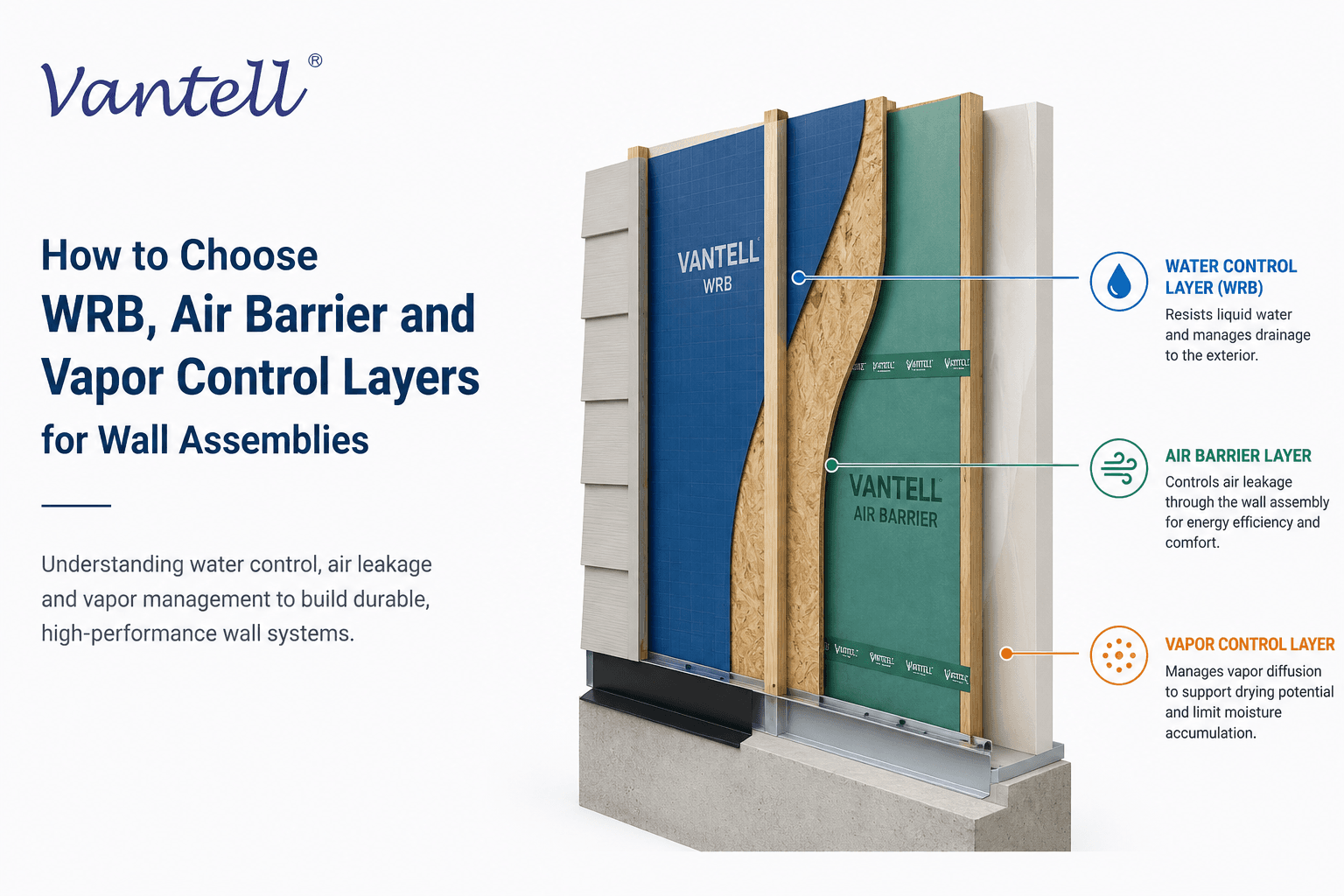
How to Choose WRB, Air Barrier and Vapor Control Layers for Wall Assemblies
WRB, air barrier and vapor control layers are often discussed together, but they do not always perform the same function. This article explains how to select membranes and tapes based on water control, air leakage control, vapor drying potential, cladding type, climate and real jobsite conditions.
2026-07-07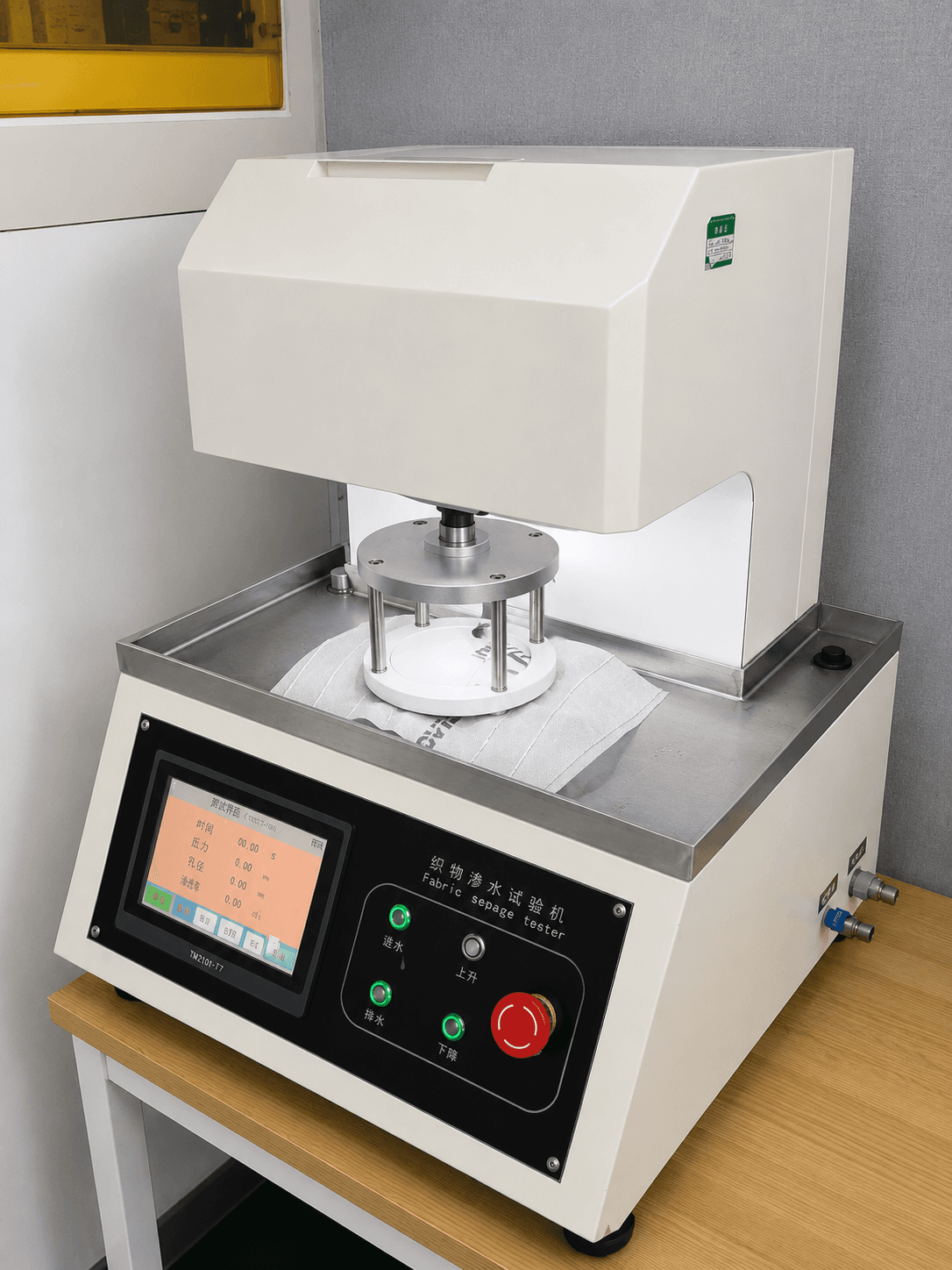
Building Envelope Material Testing: How Vantell Checks WRB, Tape and Membrane Performance
Vantell’s internal testing lab supports product development, routine quality checks and customer project evaluation for housewrap, building envelope tapes, self-adhered membranes and related building envelope materials.
2026-07-01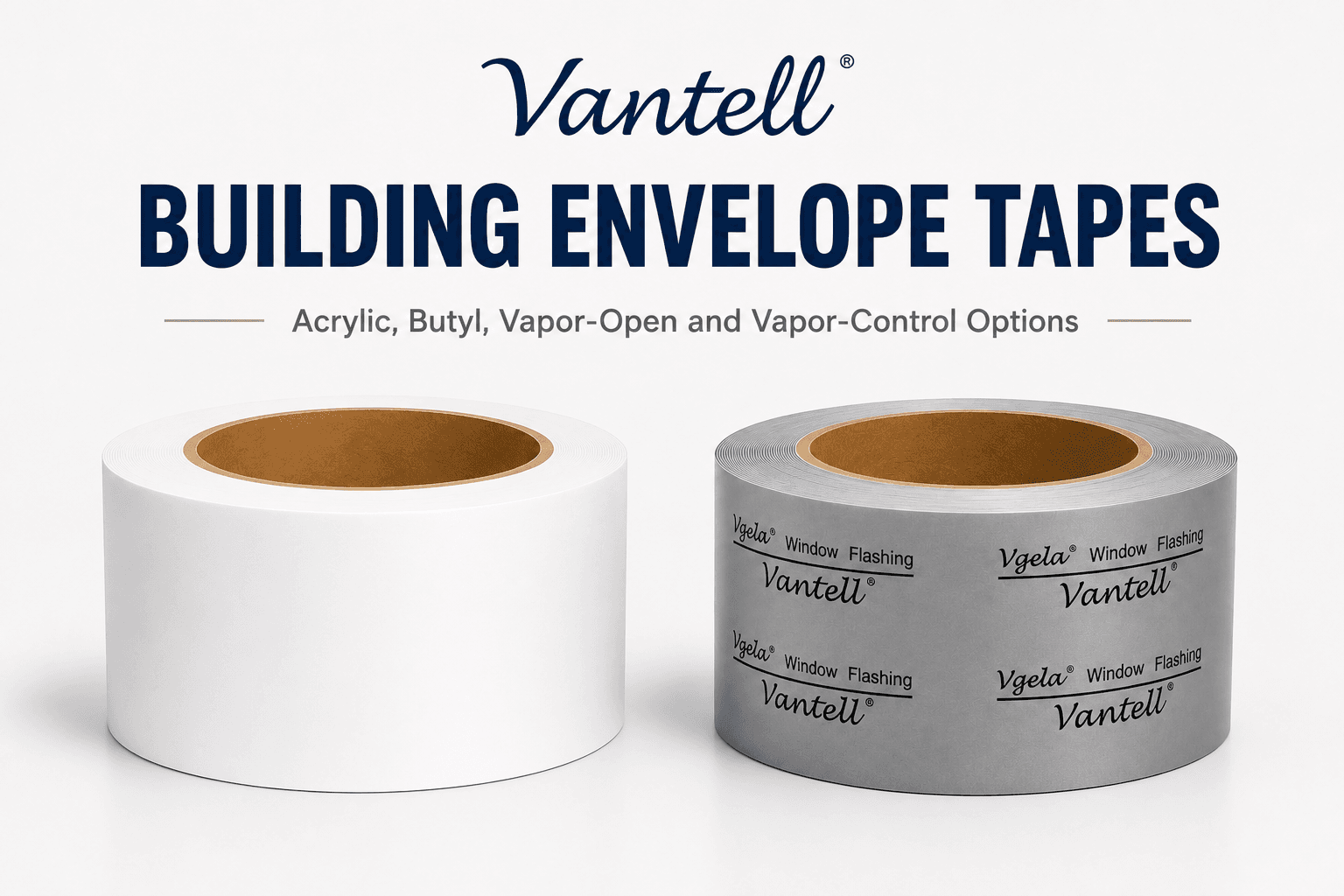
How to Choose Building Envelope Tapes: Acrylic, Butyl, Vapor-Open and Vapor-Control Options
Building envelope tapes should not be selected by adhesive chemistry alone. Acrylic, butyl, vapor-open and vapor-control tapes may serve different functions depending on the substrate, wall assembly, moisture direction, exposure condition and installation sequence. This article explains how to think about tape selection for WRB seams, membrane laps, window openings, interior air and vapor-control layers, deck joists and critical waterproofing details.
2026-06-30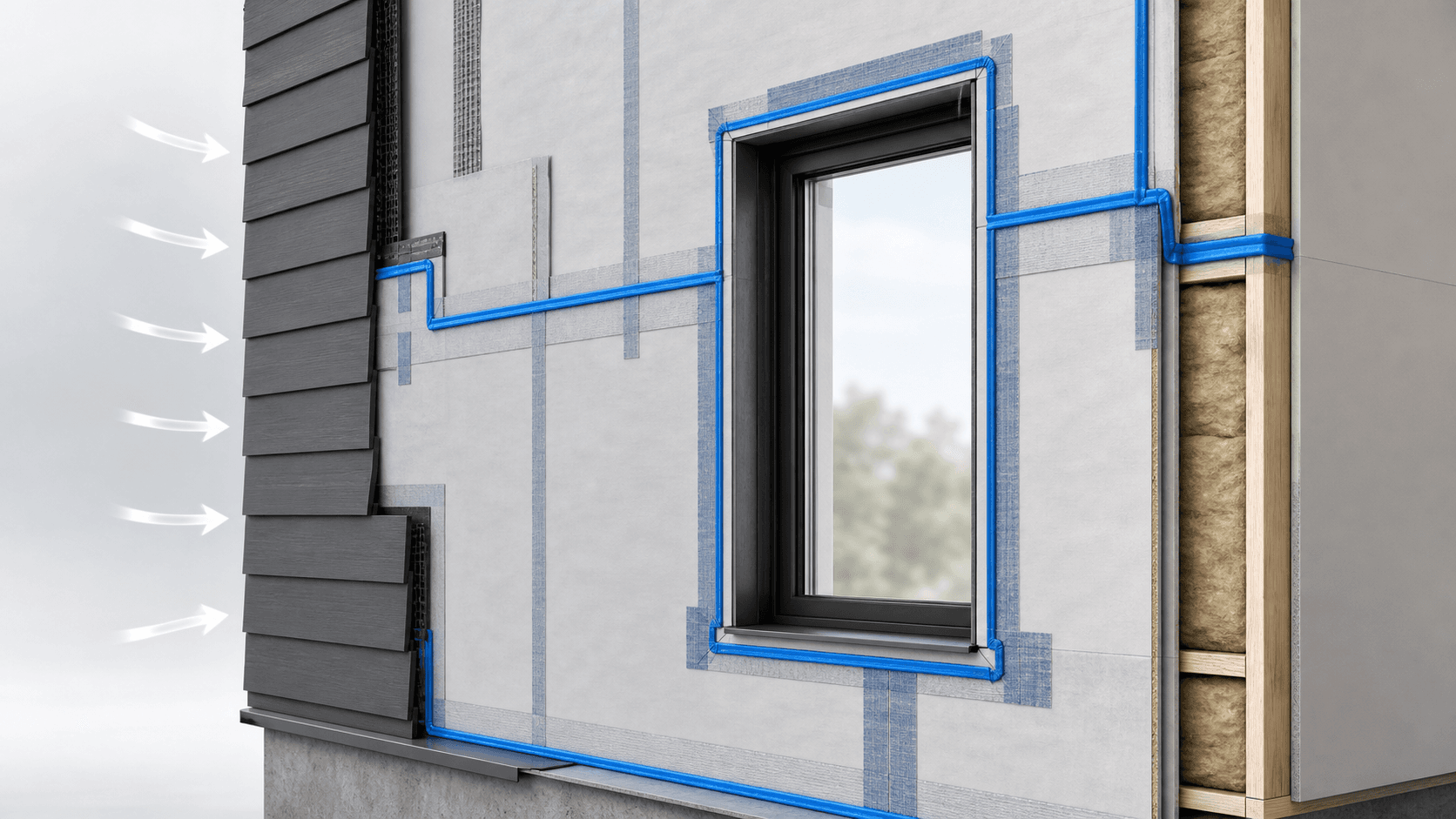
Continuous Airtightness in Wall Assemblies: WRB, Sealing Tape and Vapor-Open Systems
Continuous airtightness is a critical part of high-performance building envelope design. It defines the pressure boundary of the building, reduces uncontrolled air leakage, improves energy efficiency, limits moisture transport and helps wall and roof assemblies perform as intended.
2026-06-22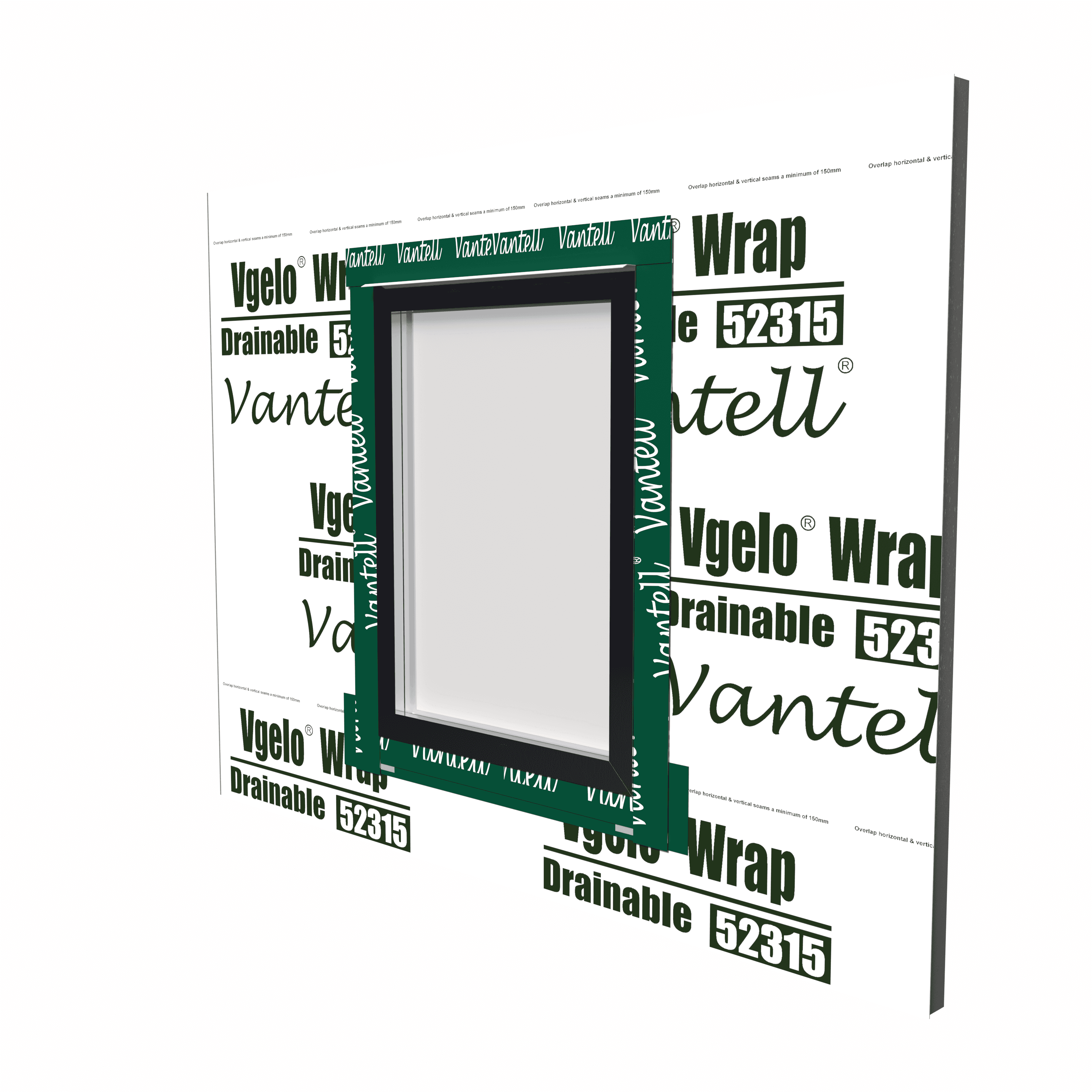
Window Flashing Tape Guide: Adapting Opening Sealing Details for Different Window Types
Window flashing details vary by window type, wall assembly and regional construction practice. This article explains the core principles behind window opening sealing, how flashing tape helps maintain WRB continuity, and why different window systems require different detailing strategies.
2026-06-15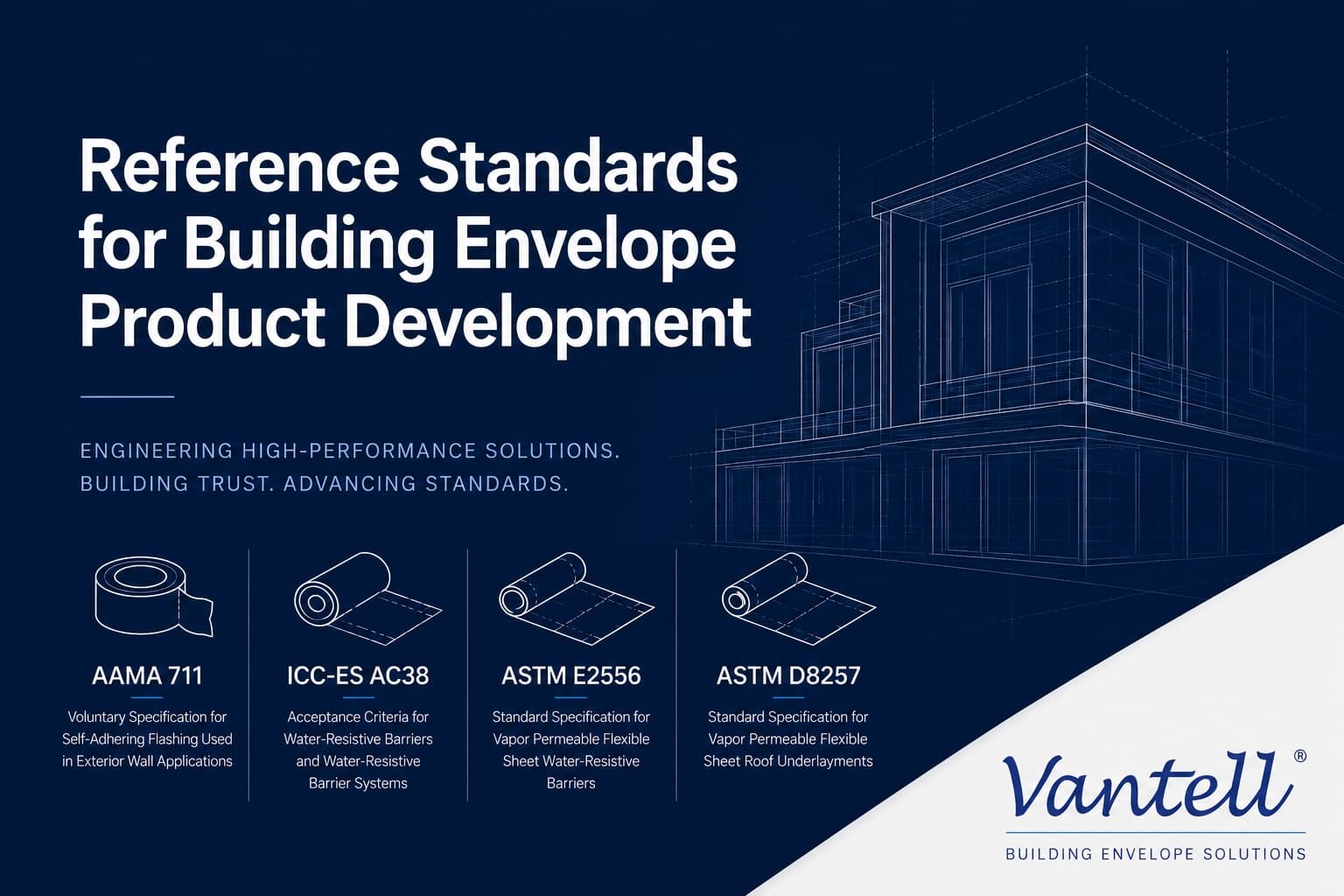
Reference Standards Behind Vantell Building Envelope Product Development
A technical overview of the key standards Vantell references when developing WRB, housewrap, flashing tape, roof underlayment, drainage and moisture management products for high-performance building envelope applications across multiple markets.
2026-06-12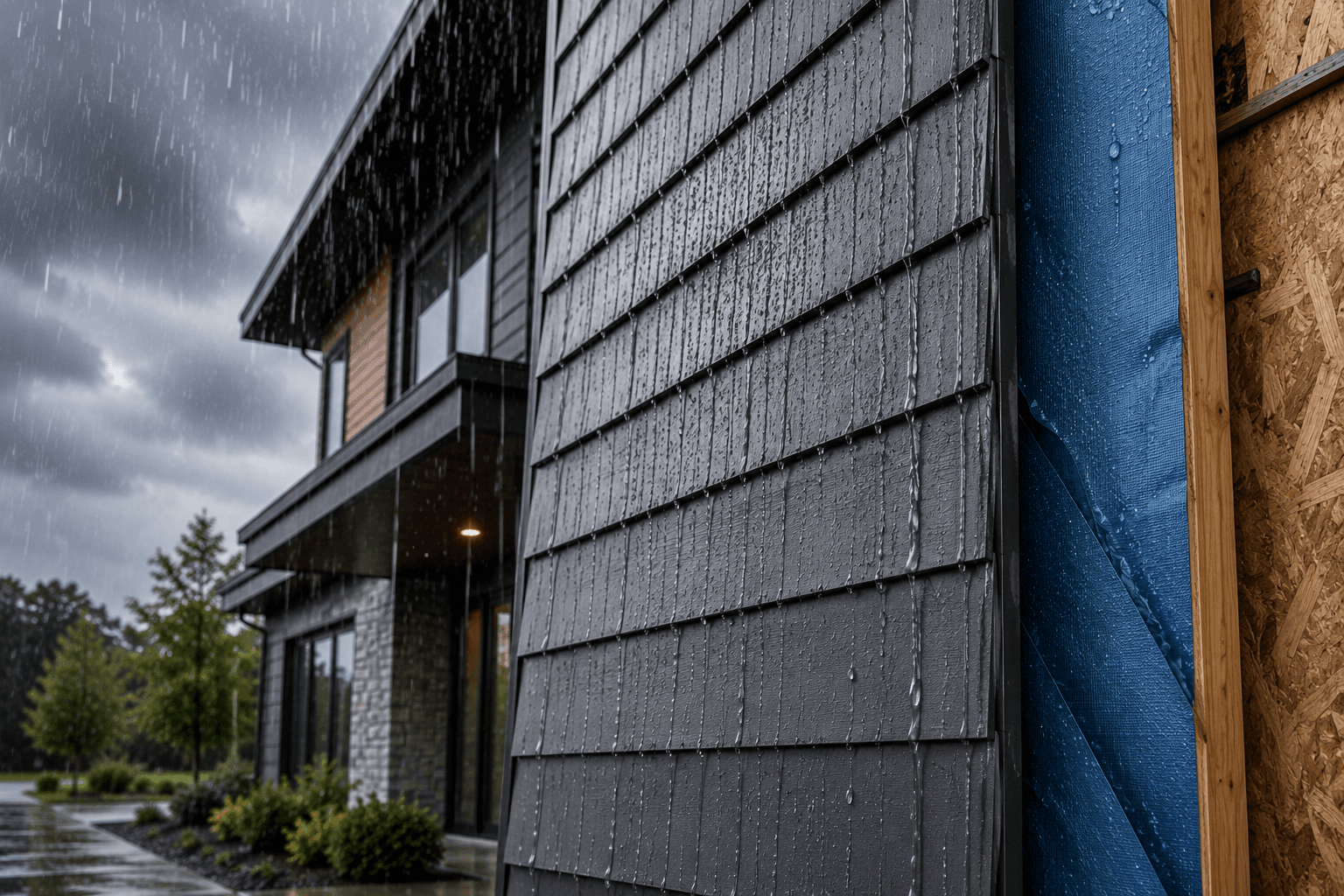
Drainable Housewrap vs Rainscreen: How to Manage Moisture Behind Cladding
Capillary action can trap liquid water between cladding, WRB and sheathing, especially when materials are in close contact. This article explains why capillary moisture matters in wall assemblies and how drainable housewrap or rainscreen systems help improve drainage, drying and long-term wall durability.
2026-06-11