
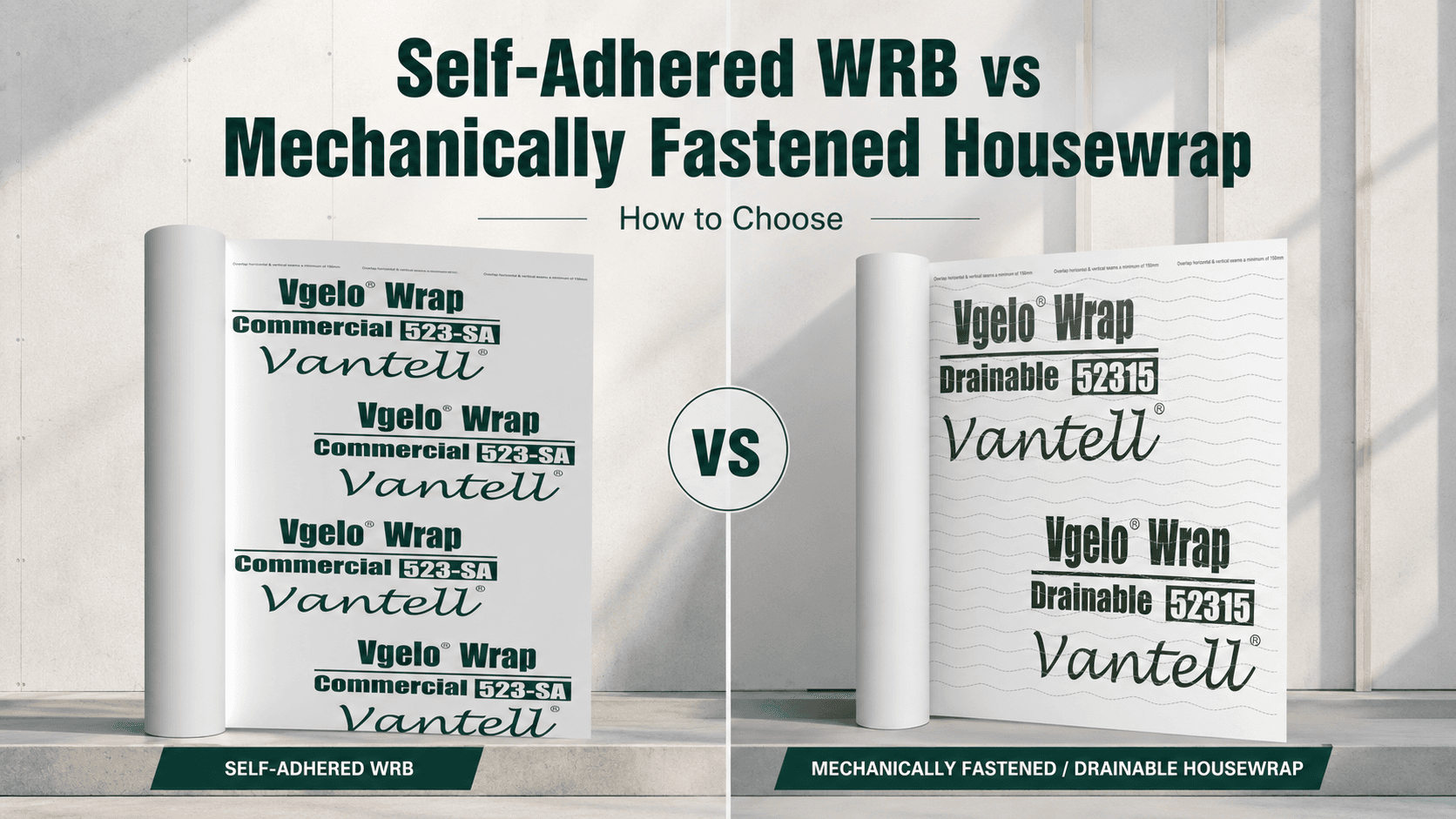
Self-Adhered WRB vs Mechanically Fastened Housewrap: The Key Differences
Self-adhered WRB and mechanically fastened housewrap are both used to create a water-resistive layer behind exterior cladding. However, they achieve this through different installation methods and place different demands on the substrate, installer and overall wall design.
A mechanically fastened water-resistive barrier is attached to the wall with approved cap fasteners or another specified fastening method. The membrane overlaps, openings, penetrations and transitions are then integrated with compatible tapes and flashing materials.
A self-adhered WRB includes a factory-applied adhesive layer that bonds the membrane directly to the exterior sheathing. This can reduce membrane billowing, limit the number of temporary attachment penetrations and create more continuous contact between the WRB and its substrate.
The choice is therefore not simply between a membrane with adhesive and one without adhesive. A proper comparison should consider:
- material cost and total installed cost;
- water-resistive continuity;
- air-control performance;
- substrate preparation;
- installation temperature and weather conditions;
- installer experience and repairability;
- drainage behind the cladding;
- vapor permeance and drying potential;
- project-specific testing and documentation.
This guide explains how the two systems differ, where each approach makes sense and what professional buyers should evaluate before selecting a WRB.
For buyers comparing current product options, Vantell offers the VWC523SA self-adhered WRB, the VWC523-W wide-format mechanically fastened housewrap, and the VWD52315 mechanically fastened drainable housewrap.
Quick Answer: Neither System Is Automatically Better
Mechanically fastened housewrap remains a practical and economical choice for many conventional wall assemblies. It is familiar to installers, generally tolerant of a wider range of jobsite conditions and well suited to projects where fastening, overlaps, seam sealing and flashing details can be consistently controlled.
Self-adhered WRB can provide stronger membrane-to-substrate contact and may improve water- and air-control continuity. It is often considered for high-performance walls, panelized construction, complex building geometry and projects seeking to reduce reliance on temporary membrane fasteners.
However, self-adhered WRB normally requires better substrate preparation and closer control of surface moisture, dust, temperature, application pressure and adhesive compatibility.
The right choice is not necessarily the product with the more advanced installation method. It is the system that can be installed reliably under the actual project conditions.
1. What Is the Main Difference?
Mechanically Fastened Housewrap
Mechanically fastened housewrap is held in place with cap nails, cap staples or another fastening method specified by the product manufacturer or project design. The membrane is normally installed in a water-shedding sequence, with overlaps arranged so that incidental water is directed toward the exterior.
Its field performance depends on more than the membrane itself. The completed installation also depends on:
- fastener type and spacing;
- horizontal and vertical overlaps;
- seam tape compatibility;
- window and door flashing;
- penetration sealing;
- repair of tears and damaged areas;
- integration with foundation, roof and opening control layers.
This approach is widely understood and can be efficient when installers are familiar with the required details. Vantell’s VWC523-W Wide-Width Housewrap is an example of a vapor-permeable WRB designed for conventional mechanical attachment across large wall areas.
Self-Adhered WRB
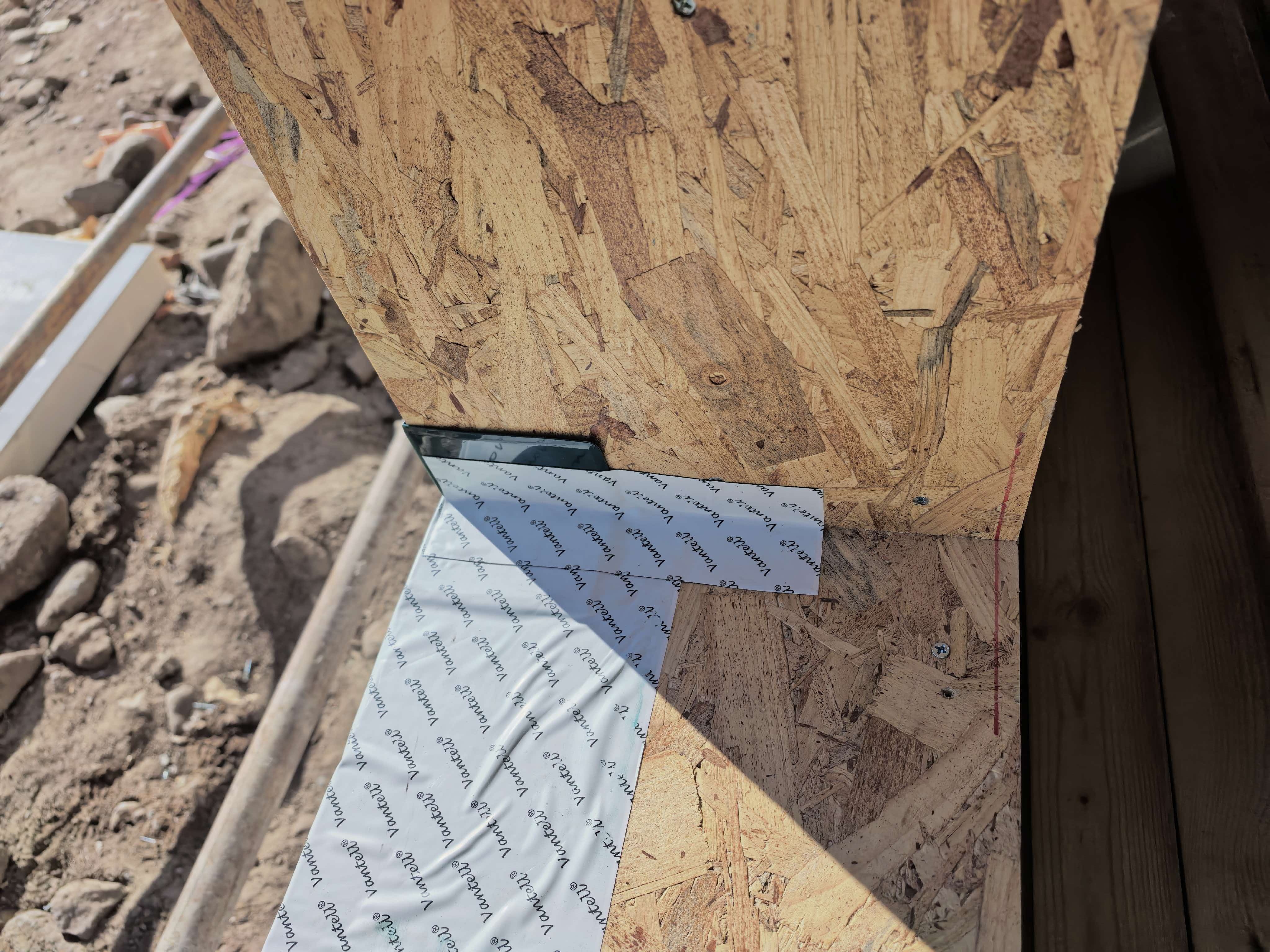
Self-adhered WRB uses a factory-applied adhesive layer to bond the membrane directly to the exterior sheathing. The installer removes the release liner, positions the membrane and applies pressure to establish uniform contact with the substrate.
A properly installed bonded membrane can help:
- reduce loose or unsupported membrane areas;
- limit billowing before cladding installation;
- reduce reliance on temporary mechanical attachment;
- improve contact across broad wall areas;
- support a more continuous exterior water- and air-control layer.
Self-adhered does not mean that the complete wall contains no fasteners. Cladding attachments, exterior insulation fasteners, furring strips, rails and other wall components may still penetrate the assembly. These penetrations must still be considered in the complete wall design.
The Vantell VWC523SA Self-Adhesive Housewrap is a vapor-permeable self-adhered WRB developed for exterior sheathing and panelized wall applications where close membrane-to-substrate contact is required.
2. Side-by-Side Comparison
| Decision Factor | Mechanically Fastened Housewrap | Self-Adhered WRB |
|---|---|---|
| Initial material cost | Generally lower | Generally higher because of the integrated adhesive system |
| Membrane attachment | Cap fasteners or another approved mechanical method | Adhesive bond to the exterior sheathing |
| Substrate preparation | Usually more tolerant of normal jobsite variation | Requires closer control of dust, moisture, surface condition and compatibility |
| Installation temperature | The main membrane attachment is less dependent on adhesive temperature, although tapes and flashing products still have application limits | Both ambient and substrate temperatures must remain within the adhesive application range |
| Billowing before cladding | More likely if the membrane is loosely installed or exposed to wind | Reduced when the membrane is properly bonded to the substrate |
| Air-control continuity | Depends heavily on sealed seams, penetrations and transitions | Continuous substrate contact can support continuity, but perimeter and penetration details remain critical |
| Membrane attachment penetrations | Includes installation fasteners | Can reduce temporary attachment penetrations, but does not eliminate later wall-system fasteners |
| Repositioning | Usually easier before final fastening and detailing | May become difficult after the adhesive develops a strong bond |
| Repair after installation | Damaged areas can often be patched relatively easily | Repairs require compatible materials and careful treatment of the bonded membrane |
| Installer familiarity | Widely familiar in conventional construction | May require training in liner control, positioning and pressure rolling |
| Drainage behind cladding | Depends on product structure and wall design | Also depends on product structure and wall design; adhesive alone does not create a drainage gap |
| Typical applications | Conventional framed walls, large wall areas and cost-sensitive projects | High-performance walls, panelized construction and projects seeking stronger membrane continuity |
3. Material Cost Is Not the Same as Installed Cost
Self-adhered WRB normally has a higher unit material cost than mechanically fastened housewrap. However, comparing only the membrane price per square foot or square meter can produce an incomplete result.
A realistic installed-cost comparison should include:
- WRB material;
- cap fasteners;
- seam tape;
- flashing tape;
- primer, where required;
- pressure rollers and installation tools;
- temporary fixing requirements;
- installation labor;
- overlap waste;
- repairs and rework;
- weather delays;
- inspection and quality-control time.
A mechanically attached WRB may have a lower material cost but require additional fastening and seam treatment. A self-adhered WRB may reduce some attachment steps but require more time for substrate inspection, release-liner removal, alignment and pressure rolling.
Wall geometry also changes the calculation. A large, flat panelized wall may be well suited to self-adhered installation. A highly irregular renovation wall with dusty, uneven or damp surfaces may be more difficult.
Installer experience is another major variable. A trained crew can apply a self-adhered membrane efficiently. An unfamiliar crew may create wrinkles, trapped air, poorly bonded edges or alignment problems that increase labor and material waste.
The meaningful comparison is total installed cost under realistic site conditions, not membrane price alone.
4. Water Control and Fastener Penetrations
Both systems can provide effective resistance to incidental water behind exterior cladding when they are correctly installed and integrated with the rest of the building envelope.
Mechanically fastened WRB includes fastener penetrations used to hold the membrane in place. Proper cap fasteners spread the load and help resist tearing, but fastener type, spacing and installation quality still matter.
Self-adhered WRB can reduce reliance on these membrane attachment fasteners. This may reduce one category of penetration and provide continuous contact between the membrane and exterior sheathing.
That does not make the finished wall penetration-free. The assembly may later receive:
- cladding fasteners;
- furring-strip fasteners;
- exterior insulation attachments;
- brick ties;
- clips and rails;
- window fasteners;
- mechanical and electrical service penetrations.
Water management therefore depends on the complete wall system. The WRB must be integrated with flashing, tapes, openings, penetrations and drainage components so that incidental water is directed toward the exterior.
5. Air-Control Continuity
A WRB may also contribute to air control, but material air resistance does not automatically make the installed wall an effective air barrier.
For a mechanically fastened WRB to function as part of the exterior air-control layer, the system normally requires careful treatment of:
- membrane seams;
- inside and outside corners;
- window and door openings;
- pipe and duct penetrations;
- foundation transitions;
- roof-to-wall transitions;
- damaged or repaired areas.
Loose membrane areas can move under wind pressure before the cladding is installed. Wrinkles and billowing can also make later detailing more difficult.
A self-adhered WRB bonds to the sheathing and can reduce this movement. Continuous contact may make it easier to define the exterior pressure boundary across broad wall areas.
However, a bonded field membrane can still leak air at an unsealed perimeter, window opening, penetration or floor-line transition. Self-adhered WRB improves one part of the continuity problem; it does not eliminate the need for complete system detailing.
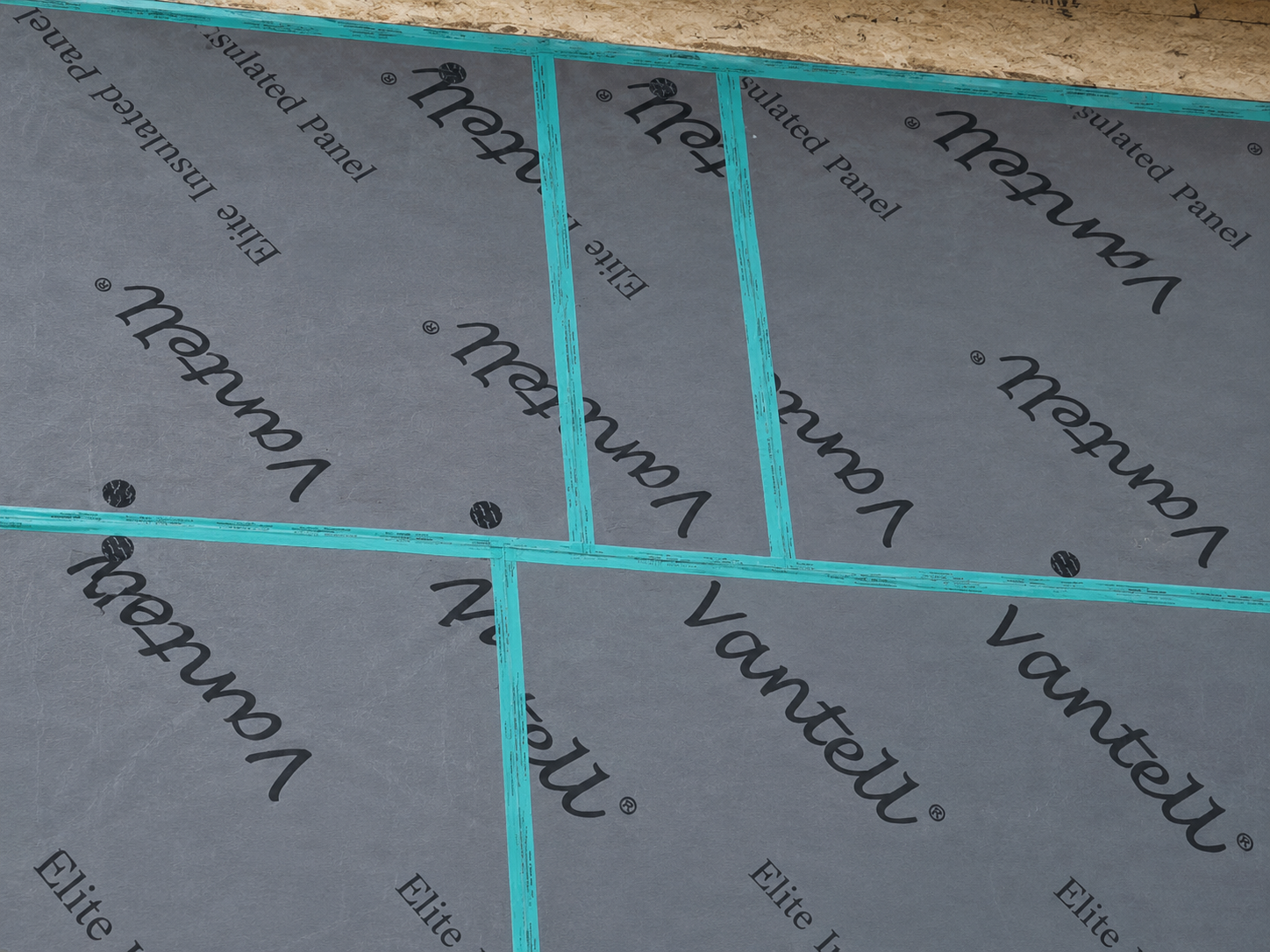
Membrane overlaps and transitions can be completed using a compatible seam-sealing product such as the Vantell VSST Acrylic Single-Sided Sealing Tape, subject to substrate and system compatibility.
6. Substrate Preparation and Adhesive Compatibility
Substrate preparation is one of the most important differences between the two systems.
A mechanically fastened membrane is generally more tolerant of normal jobsite variation because the primary attachment does not depend on a continuous adhesive bond. The substrate still needs to be structurally suitable, and sharp projections or severe surface irregularities must be corrected, but minor surface variation is usually less critical to membrane attachment.
A self-adhered WRB depends on direct contact between the adhesive and the substrate. Adhesion can be affected by:
- construction dust;
- sawdust and loose fibers;
- surface moisture;
- frost or condensation;
- oil or release agents;
- uneven sheathing joints;
- low surface energy;
- cold substrate temperatures;
- insufficient application pressure.
Common exterior substrates may include OSB, plywood, exterior gypsum, magnesium oxide board, concrete and masonry. A product that performs well on one substrate should not automatically be assumed to perform identically on another.
Before approving a self-adhered WRB, the project team should confirm:
- approved substrate types;
- minimum installation temperature;
- acceptable substrate moisture condition;
- whether primer is required;
- recommended roller pressure;
- required surface preparation;
- adhesion after water, heat and aging exposure.
The published technical data for VWC523SA includes peel-adhesion results on aluminum panel, OSB and MgO board, allowing buyers to review performance on more representative building substrates rather than relying only on adhesion to a smooth metal test surface.
7. Installation Temperature and Weather Conditions
Jobsite conditions can determine which system is easier to install reliably.
Mechanically fastened housewrap can normally be attached across a relatively broad temperature range. However, the tapes and flashing products used to complete the system still have their own application-temperature limits. Installing the membrane successfully does not help if the seam tape or flashing cannot develop adequate adhesion.
Self-adhered WRB is more directly dependent on adhesive behavior during application. Cold conditions can reduce initial tack and slow adhesive wet-out. Excessive heat may make certain adhesive systems more aggressive and harder to reposition.
Wet or frozen substrates are generally unsuitable for pressure-sensitive adhesive installation unless the product documentation specifically permits those conditions.
For projects in variable weather, buyers should review the complete installation system rather than the WRB membrane alone. This includes primers, seam treatments, flashing products, rollers, storage conditions and temporary exposure requirements.
8. Self-Adhered Does Not Automatically Mean Drainable
Adhesion and drainage are separate performance characteristics.
A self-adhered WRB may bond continuously to the sheathing but still have a relatively flat exterior surface. It does not automatically create a drainage space between the WRB and the cladding.
A drainable WRB includes a structured surface, spacer or another feature intended to provide a defined drainage path behind the exterior finish. A separate rainscreen mat or furring system may create an even larger drainage and ventilation cavity.
The wall designer should therefore consider three separate questions:
- How is the WRB attached to the sheathing?
- How does incidental water drain behind the cladding?
- Is ventilation or pressure moderation required in the cavity?
A product can be mechanically fastened and drainable. It can also be self-adhered without a built-in drainage structure. Product selection should not combine these separate functions without reviewing the actual wall design.
The VWD52315 Drainable Housewrap, for example, uses a conventional mechanically fastened installation approach while adding an integrated 1.5 mm drainage structure behind the cladding.
For a more detailed discussion, see Capillary Action in Building Envelopes: Drainable Housewrap and Rainscreen Strategies.
9. Vapor Permeance and Drying Potential
The method used to attach a WRB does not by itself determine vapor permeance.
Both mechanically fastened and self-adhered products can be designed with different vapor-control properties. The final permeance depends on the complete product structure, including the membrane, reinforcement, coating and adhesive layer.
For self-adhered WRB, buyers should review the tested permeance of the complete bonded product rather than relying only on the permeance of its face membrane.
Selection should be coordinated with:
- climate zone;
- interior vapor-control strategy;
- exterior insulation;
- sheathing type;
- indoor humidity;
- cladding and cavity design;
- expected inward and outward drying paths.
A highly vapor-permeable WRB may support outward drying, but vapor permeance cannot compensate for bulk-water leakage, poor flashing or missing drainage.
10. When Mechanically Fastened Housewrap Makes More Sense
Mechanically fastened WRB may be the more practical option when:
- the project is highly cost-sensitive;
- installers are experienced with conventional housewrap;
- the substrate cannot consistently remain clean and dry;
- construction will occur across variable weather conditions;
- large wall areas can be covered efficiently with wide rolls;
- repositioning and localized repair are important;
- the WRB is not intended to serve as the primary air-control layer;
- a separate drainage structure or rainscreen cavity will be installed.
A properly installed mechanically fastened system is not a lower-quality solution. It can provide effective water protection and contribute to air control when its seams, openings and transitions are detailed correctly.
For large commercial, panelized or light-frame walls, the 9 ft wide VWC523-W housewrap can help reduce the number of field overlaps and improve coverage efficiency.
11. When Self-Adhered WRB Makes More Sense
Self-adhered WRB may be considered when:
- continuous membrane-to-substrate contact is a project priority;
- the exterior WRB will contribute significantly to air control;
- billowing before cladding installation is a concern;
- the project uses panelized or modular construction;
- the building has complex transitions and material changes;
- the substrate is stable, compatible and properly prepared;
- the installation team can control temperature, pressure and surface condition;
- the project can justify a higher material cost for improved installation continuity.
Self-adhered WRB is not automatically easier to install. Its advantages are most likely to be realized when the substrate and installation process are carefully controlled.
The VWC523SA self-adhered housewrap is intended for commercial, panelized and high-performance wall assemblies using compatible substrates such as OSB and MgO board.
12. Selecting Among Vantell WRB Options
Vantell develops several WRB configurations for different construction methods and building-envelope requirements.
VWC523-W Wide-Format WRB
VWC523-W is a mechanically fastened, wide-format WRB intended for projects seeking efficient wall coverage and fewer horizontal membrane joints. The 9 ft roll format can be useful on framed walls where reducing the number of field overlaps is a priority.
This type of product is suitable for conventional WRB installation using approved fasteners, compatible seam tape and properly integrated window and door flashing.
View VWC523-W Wide-Width Housewrap
VWD52315 Drainable Housewrap
VWD52315 combines a mechanically fastened WRB installation method with an integrated 1.5 mm drainage structure. It is designed for wall assemblies that require a defined drainage path behind cladding while retaining a familiar mechanically attached installation method.
Published product information includes vapor-permeance, water-resistance, drainage, strength, UV-exposure and surface-burning performance data.
View VWD52315 Drainable Housewrap
VWC523SA Self-Adhered WRB
VWC523SA is a vapor-permeable, self-adhered WRB designed to bond directly to compatible exterior substrates. It is intended for applications where continuous membrane contact, reduced billowing and integration with a broader air- and water-control system are important.
As with any self-adhered WRB, substrate condition, application temperature, rolling pressure and compatibility should be confirmed before full-scale installation.
View VWC523SA Self-Adhesive Housewrap
VSST Seam-Sealing Tape
WRB selection is only one part of the system. Membrane overlaps, panel joints, repairs and transitions normally require a compatible tape to help maintain water-resistant and airtight continuity.
VSST is a single-sided acrylic sealing tape developed for housewrap, WRB, breathable membrane and vapor-control-layer joints.
View VSST Acrylic Seam-Sealing Tape
13. Project Example: Self-Adhered WRB in a Complete Envelope System
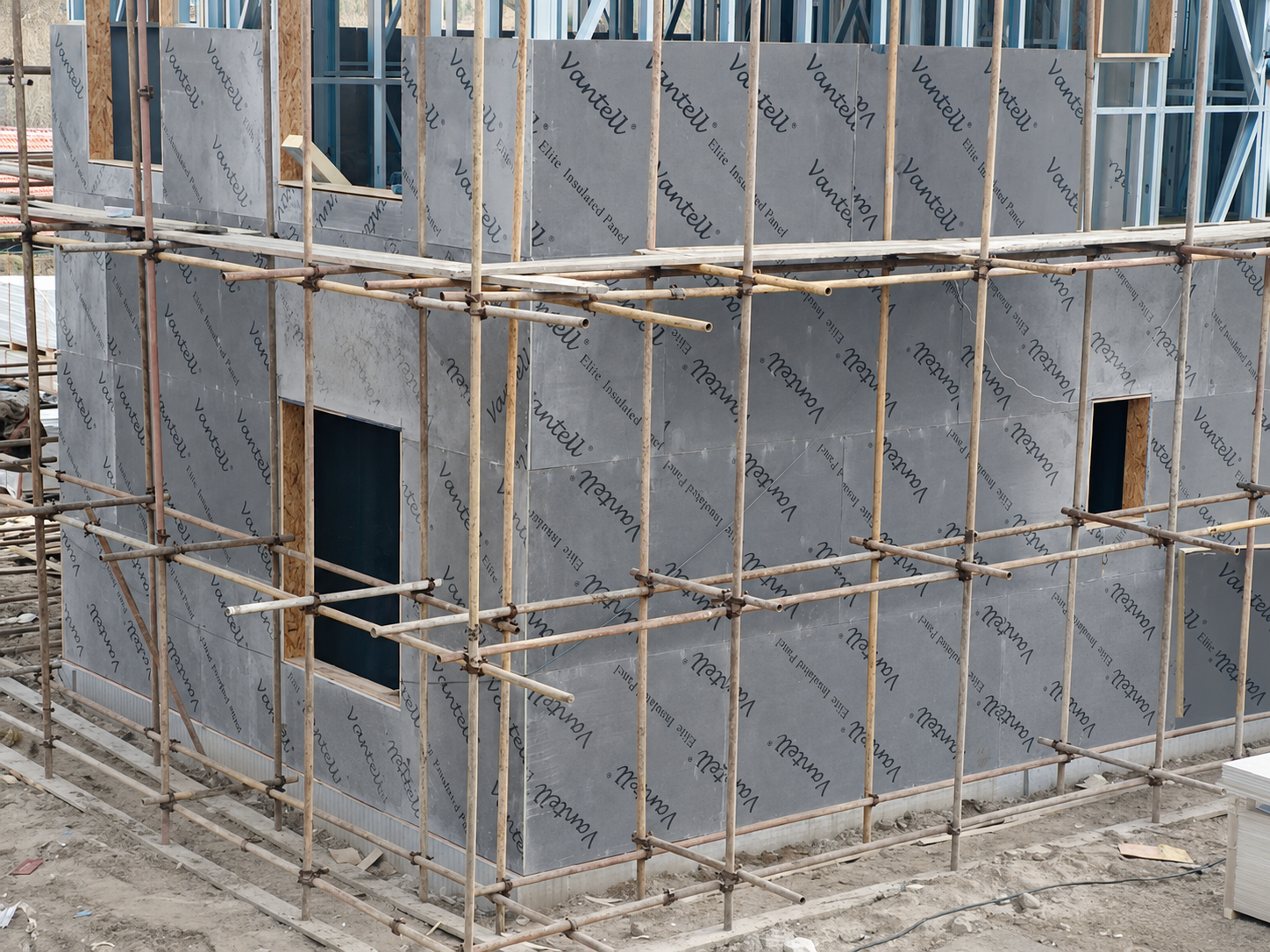
Vantell’s Weichang building-envelope project used VWC523SA self-adhered housewrap as part of an integrated wall and roof moisture-management system.
The WRB was installed over the exterior MgO surface of the insulated wall-panel assembly and integrated with:
- VSST seam-sealing tape;
- window-opening flashing materials;
- corner protection details;
- a rainscreen drainage and ventilation layer;
- exterior panel and cladding systems.
The project illustrates an important principle: self-adhered WRB performs as one component of the building envelope. Its effectiveness depends on continuous integration with openings, joints, drainage paths and adjacent control layers.
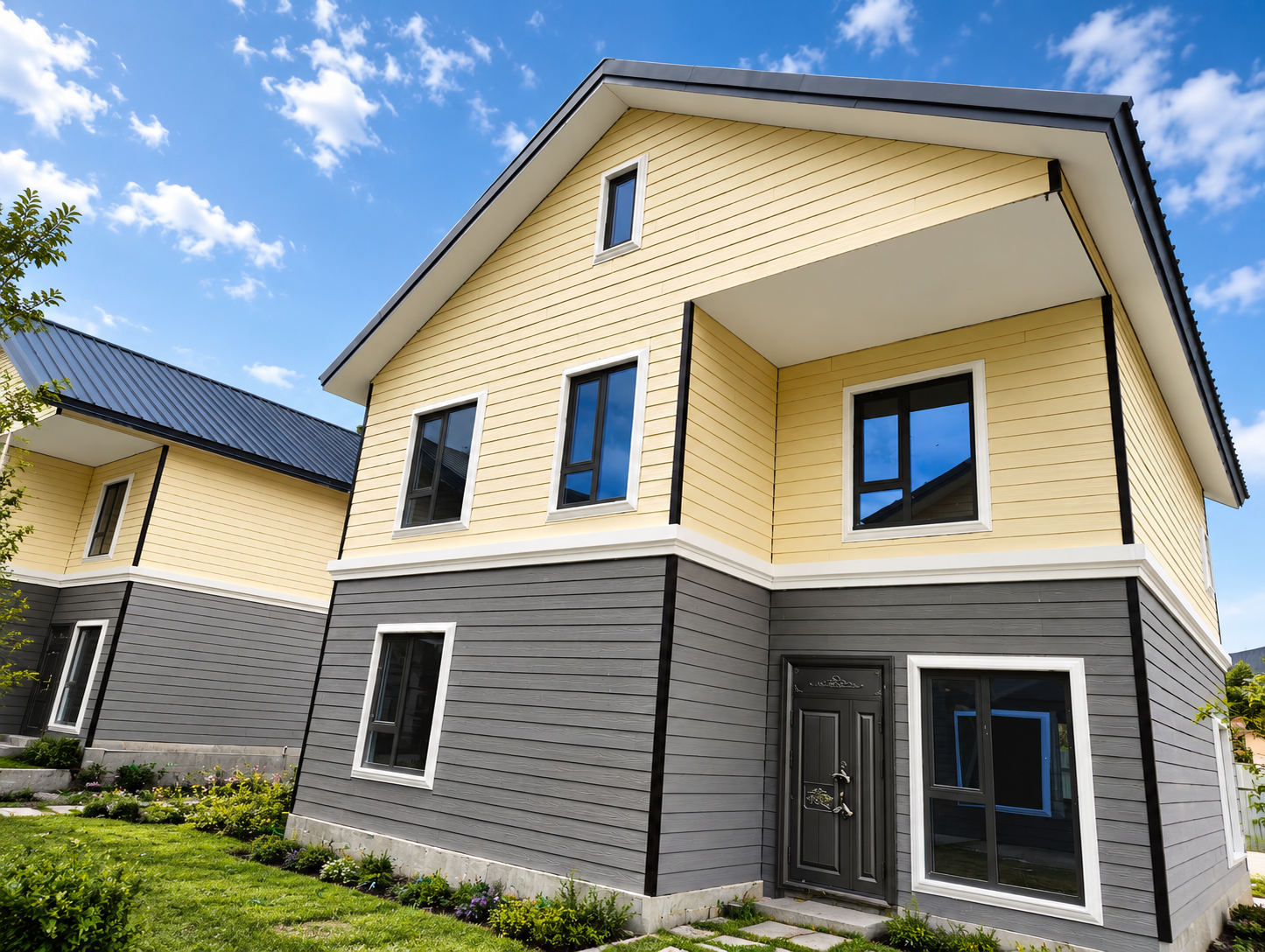
View the Weichang Complete Building Envelope System Project
14. Questions Buyers Should Ask Before Selecting a WRB
Before comparing quotations or approving samples, buyers should define the following project conditions:
- What is the exterior sheathing substrate?
- Will the substrate be consistently clean and dry?
- What is the expected installation-temperature range?
- How long may the WRB remain exposed before cladding?
- What vapor permeance is appropriate for the wall design?
- Will the WRB serve as part of the air-control layer?
- What type of cladding will be installed?
- Is an integrated drainage structure required?
- Will a separate rainscreen cavity be provided?
- What roll width and length best match the building geometry?
- Which water, strength, air and fire tests are required?
- Are third-party reports, code evaluation or private-label documentation required?
These questions make it easier to compare products based on real project requirements rather than a single headline property.
15. Testing and Documentation
Whether a project uses mechanically fastened or self-adhered WRB, performance claims should be supported by relevant test data.
Depending on the target market and application, buyers may need to review:
- water-resistance testing;
- water-vapor transmission testing;
- tensile or grab-strength testing;
- drainage-efficiency testing;
- surface-burning characteristics;
- UV-exposure duration;
- adhesion to project-specific substrates;
- adhesion after water, heat and aging exposure;
- air-leakage or assembly-level testing;
- manufacturing quality-control documentation.
For self-adhered products in particular, initial adhesion alone is not enough. The adhesive system should be evaluated on representative substrates and under relevant environmental conditions.
Buyers can review published product data for VWC523SA, VWC523-W and VWD52315, then request additional reports or project-specific documentation where required.
Conclusion
Mechanically fastened housewrap and self-adhered WRB can both provide reliable water-resistive protection when they are selected and installed as complete systems.
Mechanically fastened housewrap generally offers lower material cost, familiar installation and greater tolerance of variable jobsite conditions. Self-adhered WRB can provide continuous membrane-to-substrate contact, reduce billowing and support stronger air- and water-control continuity, but it requires closer attention to substrate preparation and adhesive application conditions.
The final decision should consider the wall assembly, climate, substrate, labor, drainage strategy, air-control requirements and total installed cost rather than assuming that either attachment method is universally superior.
Vantell supports mechanically fastened, drainable and self-adhered WRB configurations for different building-envelope applications. Compare the VWC523-W wide-format housewrap, VWD52315 drainable housewrap and VWC523SA self-adhered WRB according to the project substrate, drainage strategy, installation method and target performance.
Need help comparing WRB options? Contact Vantell to request samples, preliminary specifications or discuss a private-label WRB program.